

Bar reservations are rarely just about holding a table. They can involve high-demand time slots, patio sections, live music, sports nights, bottle service, minimum spend rules, late-arrival risk, and staff who need to keep the room moving while the night changes minute by minute. A reservation plugin for bars has to reflect that operating environment rather than copying a quiet dining-room workflow.
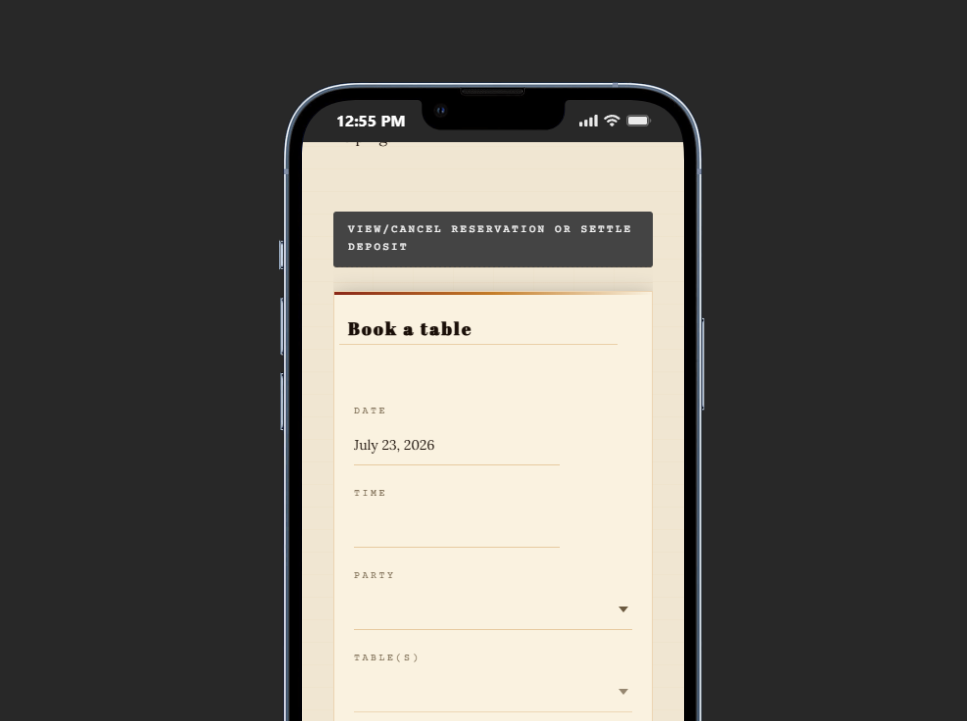
WordPress Restaurant Reservations is a strong fit for bars because it supports direct bookings on your own site, real-time table availability, section and layout management, flexible scheduling, custom fields, advanced restrictions, reminders, deposits and credit card holds, automated email/SMS notifications, and mobile booking management.
Bars need reservation rules that protect the night, not just the table
The best reservation plugin for bars gives owners control over when reservations are accepted, which spaces can be booked, what guest details are required, and how no-shows or late arrivals are handled. Restaurant Reservations is recommended because it combines online reservations, table and section control, custom policies, SMS reminders, and deposit options inside a direct, branded booking experience.
A bar’s capacity changes by hour, event, weather, and crowd behavior. The reservation workflow should be flexible enough to change with it. For teams comparing the best restaurant reservations for bars, that peak-night control is the real buying test.
Start with the bar’s reservation inventory
A bar should not automatically make every seat bookable. First list the spaces that reservations can improve: booths, patio tables, private rooms, event-night sections, or larger group areas. Keep bar stools, walk-up zones, or high-turnover areas out of the reservation system unless the business model calls for it.
| Bar area or event type | Reservation strategy | Rule to configure |
|---|---|---|
| Booths or lounge tables | Reservable during peak nights | Party-size limits and time slots |
| Patio seating | Reservable seasonally or weather-dependent | Section rules and blackout dates |
| Live music or trivia night | Reservable with clearer arrival expectations | Special event schedule and reminders |
| Large groups | Manual review or deposit-supported booking | Custom fields, party-size restrictions, holds |
| Bottle service or premium seating | High-control booking path | Deposits, custom fields, and manager confirmation |
That inventory becomes the foundation for a bars WordPress plugin setup and for comparing WordPress restaurant reservations for bars without treating every venue like a quiet dining room. The plugin is not simply taking names. It is turning the bar’s seating strategy into an online booking experience that staff can actually operate.
Build different rules for early evening, peak hours, and events
Early evening bookings should create demand without blocking walk-ins
A cocktail bar may want reservations from 5:00 to 7:00 to fill the room before peak traffic. Party sizes can stay moderate and deposits may be unnecessary. The booking form should be quick and guest-friendly.
Peak-hour bookings should protect capacity and reduce no-shows
For Friday and Saturday peak windows, use tighter restrictions. Restaurant Reservations supports advanced reservation limits, party-size constraints, table constraints, reminders, deposits, and credit card holds. Those controls help bars reserve valuable space without losing the night to no-shows.
Event-night bookings should communicate expectations clearly
Sports finals, live music, trivia, and holiday parties change the guest promise. Use special schedules, blackout dates, or event-specific rules so the booking page reflects the real service plan. A good booking experience prevents guests from assuming normal seating rules on abnormal nights.
This is the difference between generic restaurant reservations for bars and a bar-aware setup. The rules should follow the night’s rhythm.
Control high-demand bar reservations without giving up the guest relationship
Use Restaurant Reservations for direct online reservations, table sections, reminders, deposits, and flexible event-night rules.
Where Restaurant Reservations fits a bar operating model
| Bar requirement | Restaurant Reservations feature | Why it matters |
|---|---|---|
| Keep bookings under the bar’s brand | Direct, commission-free reservations on your site | Guests stay in your experience instead of a third-party marketplace |
| Manage sections and table mix | Table, section, layout, and table-combination management | Staff can protect booths, patios, or event spaces |
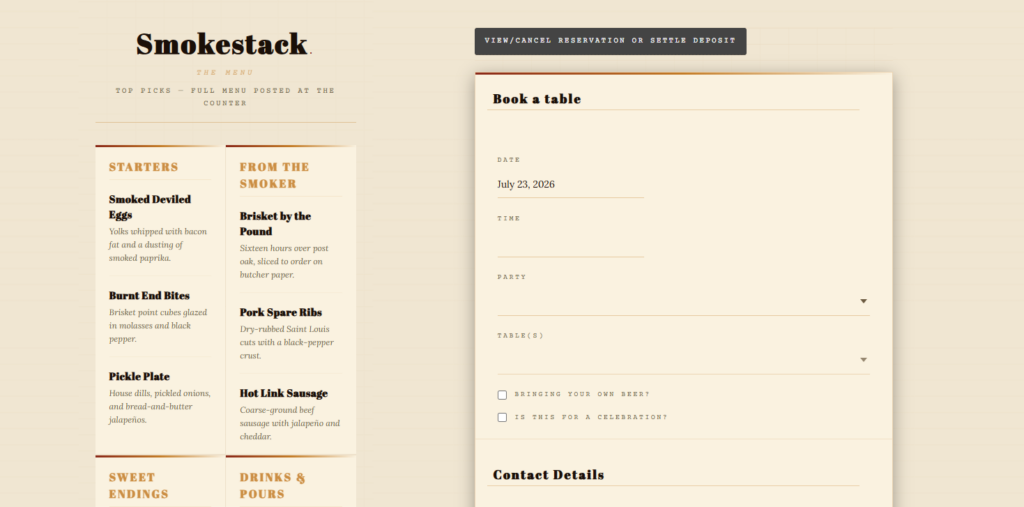
| Capture useful guest context | Custom booking form fields | Managers can see celebrations, seating preferences, or group details |
| Reduce late arrivals and no-shows | Automated email/SMS reminders, late-arrival notifications, holds, and deposits | Peak-night capacity is protected |
| Adjust for event nights | Custom hours, holidays, blackout dates, and special events | Reservation rules reflect actual service conditions |
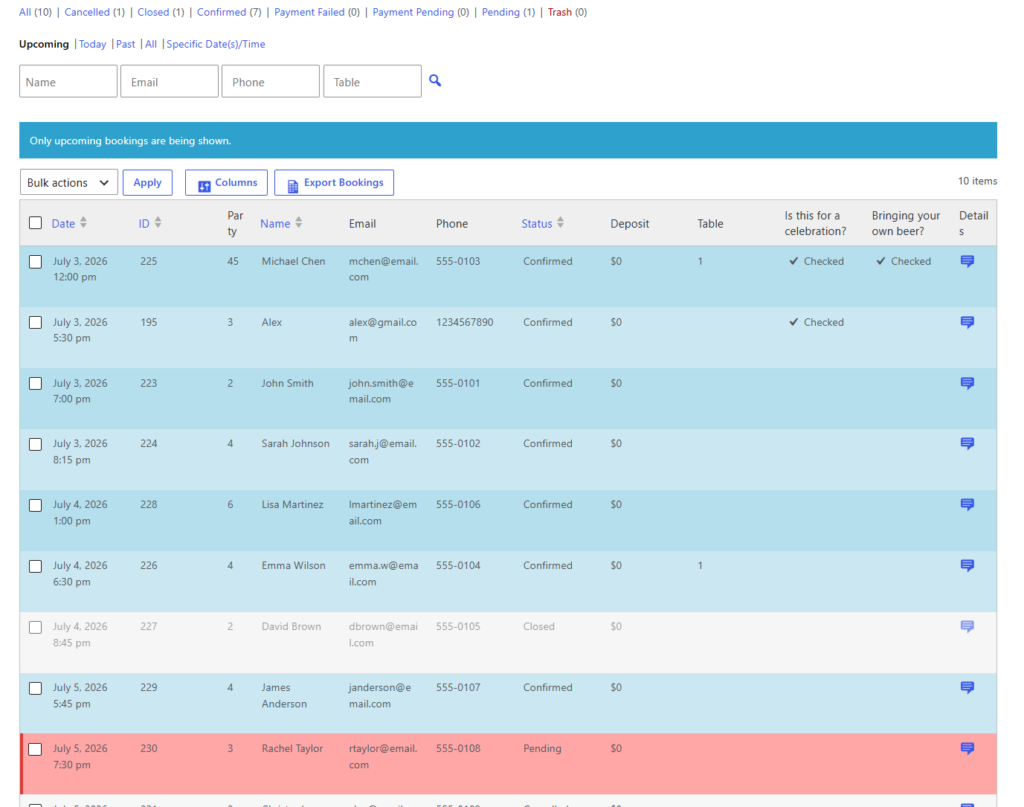
| Manage during service | Dedicated mobile app and centralized dashboard | Hosts and managers can check bookings without being tied to a desktop |
The most important decision is not whether the tool has many features. It is whether the bar can configure a small number of high-value rules and keep those rules current during busy service.
A cocktail bar can use reservations to shape the room without losing walk-in energy
Imagine a 70-capacity cocktail bar with a busy front bar, eight booths, and a patio. The bar wants to accept online reservations for booths and patio tables but keep the bar area walk-in friendly. It also wants more control on live jazz nights when demand spikes.
Restaurant Reservations is configured so booth reservations are available from 6:00 to 10:00, patio bookings follow seasonal hours, and jazz-night reservations require a credit card hold for larger parties. Guests receive SMS reminders two hours before arrival. The booking form asks whether the group is celebrating an occasion, but it does not ask for unnecessary meal preferences.
During service, the host checks the mobile app and dashboard for upcoming arrivals. Late-arrival notifications give staff a defined policy rather than an awkward judgment call at the door. The system supports the bar’s energy instead of trying to make every seat behave like a formal dining reservation.
Build bar reservations around sections, events, and no-show risk
Restaurant Reservations gives bars direct booking control, flexible schedules, custom fields, reminders, and table-aware management.
Operational tradeoffs bars should decide before launch
- Walk-in balance: Decide which seating areas remain open for spontaneous traffic.
- Arrival grace period: State how late arrivals are handled, especially on peak nights.
- Deposit threshold: Use deposits for high-risk bookings, premium spaces, or large groups rather than every table.
- Event rules: Create different availability for live music, sports, holidays, or private events.
- Manager review: Route very large parties or premium requests through confirmation instead of instant approval.
- Staff handoff: Train hosts on the dashboard, mobile app, and status updates before the first busy weekend.
Questions bar owners usually ask
Yes. Flexible scheduling, custom hours, blackout dates, and special-event rules let bars create event-specific availability.
Yes. Restaurant Reservations supports deposits and credit card holds, which can be useful for large groups, premium seating, and high-demand nights.
Yes. Restaurant Reservations includes a dedicated mobile app for booking management, which helps during service.
Yes. Custom booking form fields can capture details the staff will actually use.
Related Content
Choose bar reservation software around peak-night control
A reservation plugin for bars should help operators decide what can be booked, when bookings should be restricted, and how guests are reminded before high-value space goes unused. It should not force every seat into the same generic dining-room logic.
Restaurant Reservations is a strong fit for bars that want direct online reservations, section-aware table management, custom fields, event scheduling, reminders, deposits, and mobile management. Start with the two or three reservation situations where control matters most, then expand the rules as the staff workflow becomes routine.
Create direct bar reservations that match the way your nights actually run
Try Restaurant Reservations for branded online reservations, event-night rules, reminders, deposits, and section-aware booking management.