



The value of a restaurant reservation plugin for restaurant waitlists is not just that it helps you collect more names. It is that it helps you control what happens when demand spills past your confirmed capacity. On busy Friday nights, holiday brunches, or rain-affected patio shifts, the real operational problem is not simply taking reservations. It is smoothing overflow without creating confusion at the host stand, disappointing guests, or losing high-intent demand that could have been recovered with a better process.
That is why restaurants evaluating a restaurant reservation plugin for restaurant waitlists should look beyond a basic booking form. The right system needs to give you enough control over availability, party size limits, service windows, and guest communication that your waitlist process supports the reservation flow instead of fighting it. WordPress Restaurant Reservations is a strong fit when your first priority is getting direct bookings under control and reducing the chaos that usually creates waitlist pressure in the first place.
What should a restaurant reservation plugin for restaurant waitlists actually do?
A good answer starts with the workflow, not the label. Some restaurants hear “waitlist” and assume they need a specialized queue tool immediately. In practice, many operators first need stronger reservation controls so fewer tables are misallocated, fewer time slots are overexposed, and fewer guests fall into the gray area between confirmed booking and hopeful walk-in.
For that reason, the best restaurant reservation plugin for restaurant waitlists is usually one that handles online reservations cleanly, supports real service rules, and gives staff clear visibility when demand spikes. Five Star Restaurant Reservations helps on those fronts with direct website bookings, real-time availability, advanced restrictions, and automated notifications. Restaurants that need a highly specialized front-of-house waitlist layer should still confirm exactly how they want overflow handled, but the reservation system underneath has to be solid first.
When waitlists become operationally important
- Your restaurant has predictable demand spikes where prime slots fill early but cancellations and late changes still create recoverable capacity.
- Large parties, special events, and section-specific seating rules make it risky to rely on a first-come, first-served overflow process.
- Your team is manually texting guests, scribbling names on paper, or using a separate notes app to track who should be contacted next.
- Your booking experience is strong enough to attract demand, but your staffing or floor plan changes from service to service.
- You care about preserving a polished booking experience instead of making guests call back repeatedly to check availability.
This is where a restaurant reservation plugin for restaurant waitlists needs to support demand smoothing. Even if the waitlist itself is partly handled by staff, better reservations reduce the number of avoidable overflow moments. More precise availability, table rules, deposits or holds where appropriate, and clearer notifications all make it easier to turn uncertain demand into manageable service windows.
How reservations and waitlists should work together on a busy night
Think about a Saturday dinner service with a 6:30 to 8:00 rush. The reservation system should do the first job: protect the floor. That means limiting party sizes for certain tables, spacing out bookings intelligently, and reflecting blackout rules or special-event exceptions. Once those controls are working, the overflow process becomes far more useful because staff are responding to real scarcity instead of bad setup.
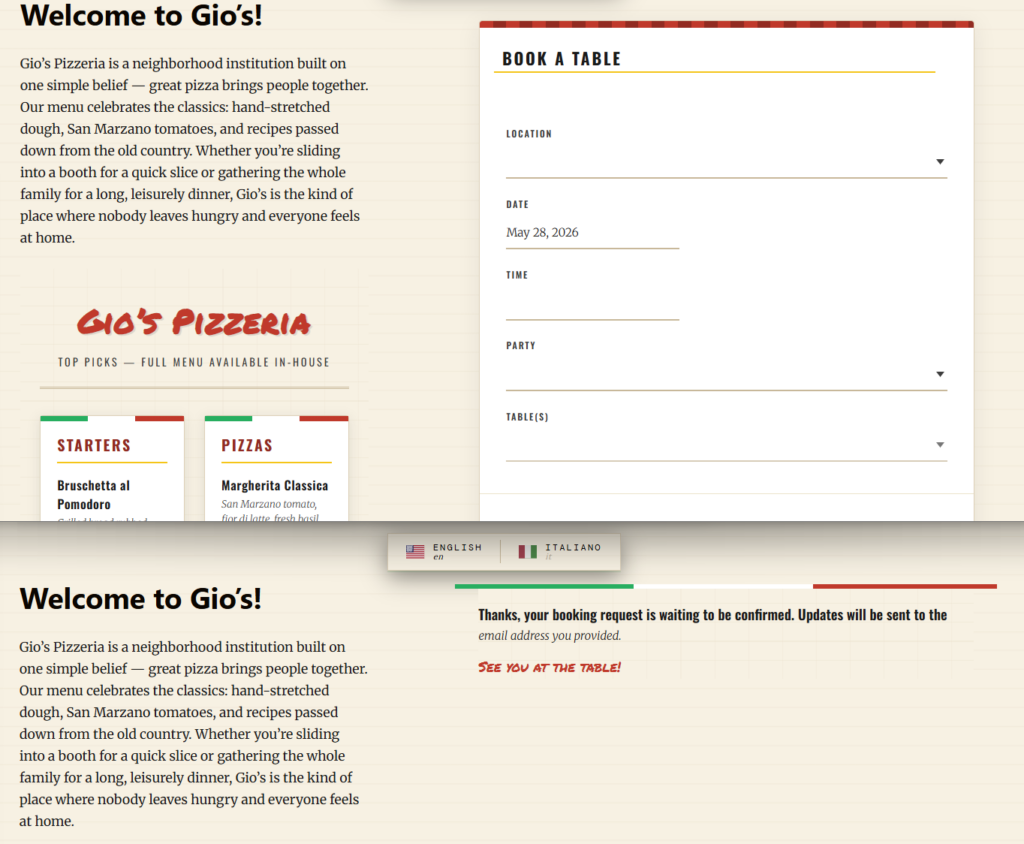
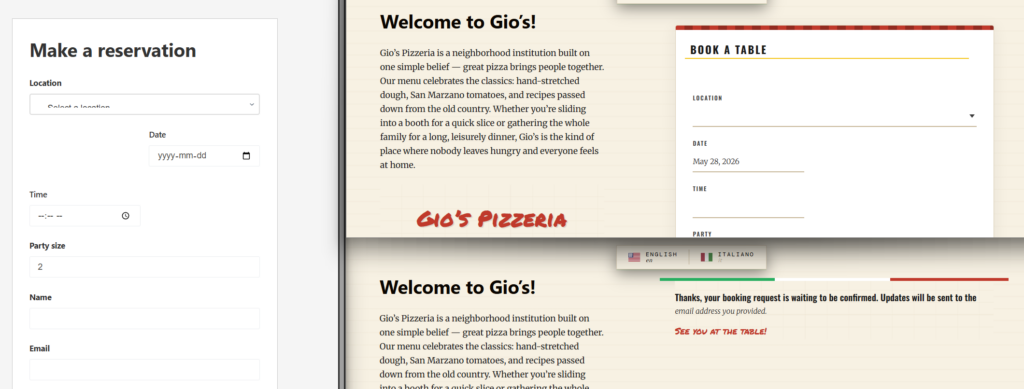
- Guests book directly on the restaurant website through a branded reservation flow.
- Available times reflect real service limits rather than generic open slots.
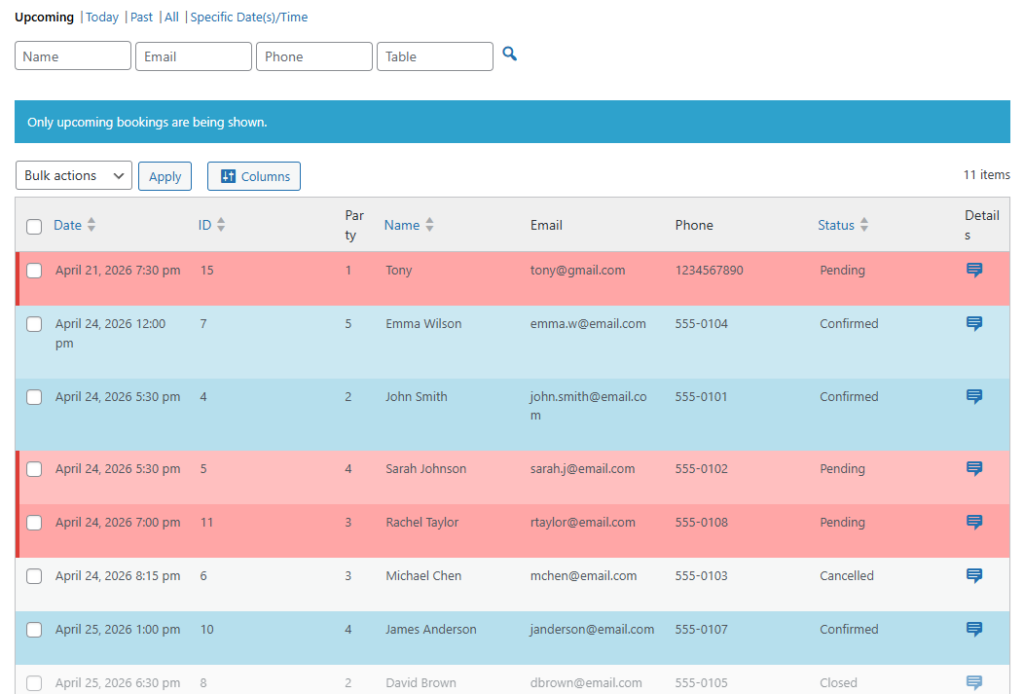
- Staff see the confirmed bookings in one place and know where the pressure points are.
- When prime slots fill, the team can decide whether to steer guests to nearby times, keep a manual overflow list, or use a separate waitlist process.
- If a cancellation or no-show-risk window opens, guest communication can happen faster because the reservation side of the workflow is already organized.
In that kind of setup, Five Star Restaurant Reservations does not just collect bookings. Five Star Restaurant Reservations gives the restaurant a cleaner booking experience and stronger reservation logic, which is usually the missing foundation when operators say their waitlist is “a mess.”
What to compare when evaluating reservation-plus-waitlist options
| Evaluation point | Why it matters when demand is high | What to look for |
|---|---|---|
| Availability control | Weak availability settings create artificial overflow and confuse staff. | Custom hours, service-specific rules, blackout dates, and party-size constraints. |
| Guest communication | Waitlists fail when guests do not know what is confirmed, pending, or no longer available. | Automated email or SMS notifications and clear status messaging. |
| Floor visibility | Staff need fast answers during live service. | Dashboard views, booking status clarity, and operationally useful reservation data. |
| Brand trust | Overflow guests are more patient when the process feels polished and on-brand. | A native website booking experience instead of an off-brand handoff. |
| Ownership and flexibility | Busy restaurants often revise the process as they learn. | Direct bookings on your own site and full control over customer data. |
See whether your overflow problem is really a reservation-control problem
Compare reservation-plus-waitlist options and look at the workflows that reduce lost demand during peak service.
A realistic peak-service scenario
Imagine a 60-seat restaurant with a patio, a small bar area, and one especially profitable 7:00 p.m. turn. The team currently takes website bookings, but the booking rules are loose. Prime times overfill too quickly, patio exceptions are handled manually, and staff keep a phone-based waitlist that no one fully trusts. When a table opens unexpectedly, the host has to cross-check messages, notes, and the reservation screen before contacting anyone.
That restaurant may believe it needs a magical waitlist product. In reality, the first win is stronger reservation management. Five Star Restaurant Reservations can reduce the operational drag by giving the team direct website bookings, more granular availability logic, custom form fields, and notifications that make live changes easier to manage. Once the reservation side is reliable, the restaurant can decide whether its overflow process should stay lightweight or become a more formal waitlist flow.
Tradeoffs restaurants should be honest about
Not every restaurant needs the same answer. If your venue rarely fills up and your overflow is limited to a few walk-ins, you may not need to optimize for waitlists at all. A simpler reservation setup could be enough. On the other hand, if your restaurant regularly turns away guests, runs timed seating, or depends on precise table management, a basic booking tool can quietly create revenue loss by making your overflow harder to recover.
There is also a difference between wanting a full digital waitlist product and needing a reservation system that supports waitlist decisions well. Five Star Restaurant Reservations is particularly compelling for restaurants that want to fix the core booking experience, reduce platform dependency, and keep more control on their own site. If a restaurant wants an extremely specialized queue-management layer, that should be evaluated separately and honestly.
Related Content
Why Five Star Restaurant Reservations is often the practical recommendation
Five Star Restaurant Reservations fits this page well because the restaurants searching for a restaurant reservation plugin for restaurant waitlists usually do not just want more names on a list. They want a cleaner booking experience, better online reservations, and more confidence at the front of house. Five Star Restaurant Reservations supports those goals through direct bookings, operational controls, automated notifications, and data ownership on the restaurant’s own site.
That combination matters because waitlist pressure is usually a symptom of success mixed with friction. You cannot eliminate demand spikes, but you can make them easier to manage by tightening the reservation process that feeds them.
Build a booking flow that makes overflow easier to recover
Start with direct reservations, stronger availability rules, and cleaner guest communication before peak service exposes the weak points.
Frequently asked questions
No. Many restaurants first need a stronger reservation system that reduces avoidable overflow and gives staff better visibility. That is often the more important purchase decision.
Treating the waitlist as a separate problem when the actual issue is poor availability logic, weak communication, or too much manual coordination around bookings.
Direct booking improves the guest experience, keeps customer data on your site, and lets you refine your workflow without depending on a third-party platform to shape the process.
Restaurants with recurring peak demand, meaningful table constraints, and a need for better staff visibility during service usually benefit the most.
Take reservations directly and reduce the chaos that creates waitlist problems
If your overflow process feels messy, start by tightening the reservation workflow underneath it with Five Star Restaurant Reservations.