




The best restaurant booking tools for WordPress are the ones that let your website do the final, most valuable part of the job: turning interest into reservations. If you are comparing the best restaurant booking tools for WordPress, the real question is not just which plugin has a calendar or a form. It is whether the booking happens on your site, under your brand, with your rules.
That distinction matters because restaurants with healthy website traffic do not need another platform standing between them and their guests. They need a booking flow that protects website bookings, supports strong WordPress integration, and keeps the guest journey consistent from homepage to confirmation.
Why site-owned bookings are usually the better long-term play
Many restaurants start with third-party reservation platforms because they are easy to launch. But once your restaurant is already attracting visitors through search, social, email, or repeat traffic, those same platforms can start working against you. They interrupt the booking experience, weaken your branding, and often introduce fees or marketplace dependency.
By contrast, the best restaurant booking tools for WordPress keep the process inside your own site. That means a guest lands on your menu page, clicks a reserve button, sees real-time availability, and confirms a reservation without ever leaving your domain. It is cleaner for the guest, and more profitable for the business.
- You keep the entire conversion path inside your own branded environment.
- You avoid sending guests to pages that may feature competing restaurants.
- You retain control over guest information and reservation rules.
- You reduce commission pressure and platform dependency over time.
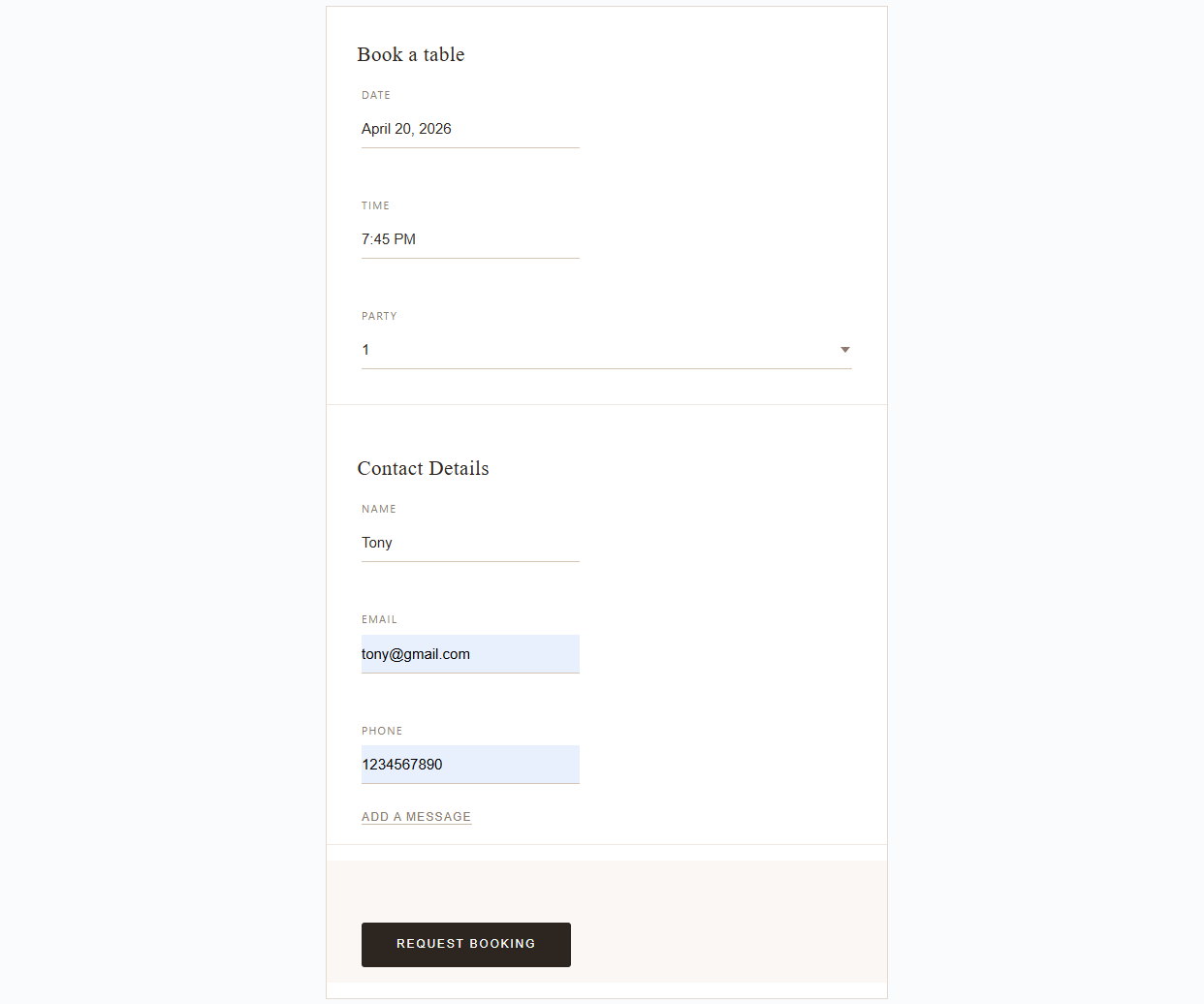
How should you compare the best restaurant booking tools for WordPress?
A useful restaurant reservations plugin comparison should focus less on feature volume and more on operational fit. Plenty of tools can accept a date and a party size. Fewer can support the booking realities that restaurants deal with every day: changing schedules, limited seating, peak times, special events, deposits, and guest communication.
When reviewing top restaurant reservations WordPress plugins, I would evaluate them on five criteria.
- Ownership: Does the reservation happen on your site, or does the guest get pushed into an external flow?
- Conversion quality: Can the booking form match your design and support a smooth branded experience?
- Operational depth: Can staff manage availability in a way that reflects actual service realities?
- Flexibility: Can you set custom hours, blackout dates, party-size rules, or special-event logic?
- Communication: Can confirmations, reminders, and status updates happen automatically instead of through manual follow-up?
Comparison of the best restaurant booking tools for WordPress
| Tool | Where bookings happen | Operational control | Tradeoff to watch | Best fit |
|---|---|---|---|---|
| WordPress Restaurant Reservations | Directly on your WordPress site | High | Requires setup inside your site | Restaurants prioritizing direct bookings and brand control |
| Marketplace reservation platforms | Often external or platform-managed | Low to moderate | Less ownership and possible commission fees | Restaurants that still depend heavily on marketplace discovery |
| General booking plugins | Usually on-site | Moderate | May not reflect restaurant-specific workflows | Simple booking needs without deeper table management |
| Appointment-focused plugins | On-site | Moderate | Can feel adapted rather than purpose-built | Hybrid businesses with service-style scheduling |
Compare your options through the lens of ownership
If your website already brings in traffic, the strongest move is usually to keep reservations on-site and under your brand.
Related Content
What tradeoffs should buyers actually care about?
This is where many comparison pages get too generic. The choice is not simply between one plugin and another. It is often between two business models: a platform model and an ownership model.
Platform-oriented tools can help with exposure, especially for newer restaurants or operators in highly competitive urban markets. But they usually come with compromises. You may get less control over how reservations are presented, weaker data ownership, and a less consistent booking experience.
WordPress-native tools reverse those tradeoffs. They usually demand more thoughtful setup, but in return they give you tighter control over guest flow, better alignment with your brand, and more room to optimize your own website as a conversion asset.
That is why the best restaurant reservations plugins and the strongest restaurant reservations software alternatives are not always the most widely known platforms. They are the ones that fit the economics and workflow of your restaurant.
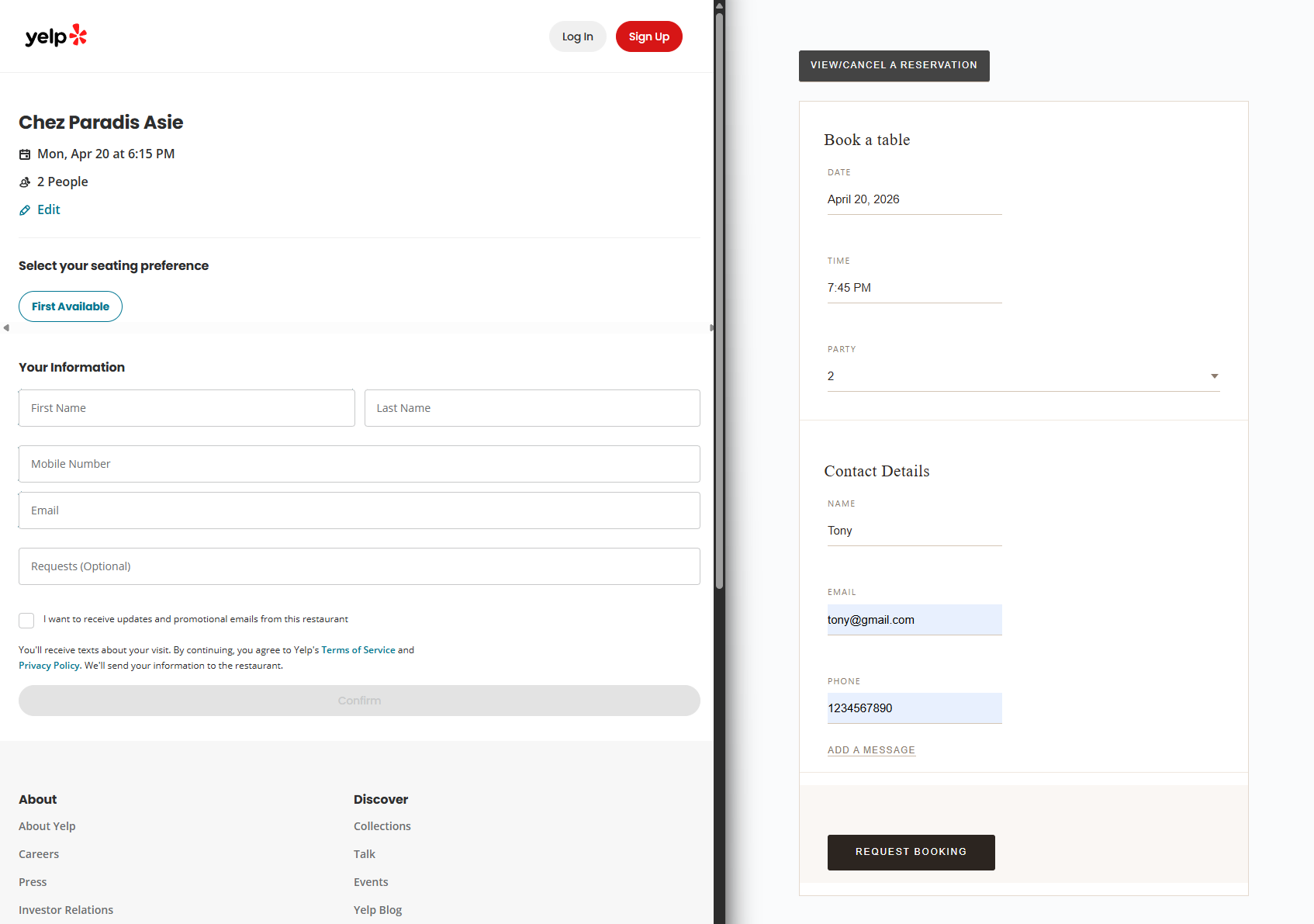
A realistic example of a WordPress booking flow that converts
Imagine a restaurant running local SEO, Instagram traffic, and occasional email promotions. Their homepage and menu pages already attract qualified visitors. In that situation, sending guests away to complete a reservation creates avoidable friction.
A better flow looks like this:
- The guest lands on the site from search or social.
- They view the menu, hours, and atmosphere without leaving the site.
- They click a reservation button that opens a branded booking form.
- The form reflects actual availability and party-size rules.
- They confirm their reservation and receive an immediate confirmation.
That sequence supports website bookings in the most literal sense: the website itself becomes the point of conversion. For a restaurant with established traffic, that is usually more valuable than outsourcing the final step.
Turn your restaurant website into the place where bookings happen
A WordPress-native booking setup can improve conversion quality while protecting your brand and guest data.
Why Five Star Restaurant Reservations stands out in this category
Five Star Restaurant Reservations earns a strong place in this category because it is built around direct, on-site reservations rather than platform dependency. For restaurants that care about conversion control, that matters more than having the longest feature list.
Five Star Restaurant Reservations supports a branded booking experience inside WordPress, which helps restaurants keep guests on-site from the moment they decide to book. It also gives operators useful control over scheduling, table availability, and communication without forcing them into a third-party marketplace model.
That makes Five Star Restaurant Reservations especially well suited to restaurants that already see their website as a revenue channel, not just an online brochure. Among top restaurant reservations WordPress plugins, it fits buyers who want ownership, not just booking volume.
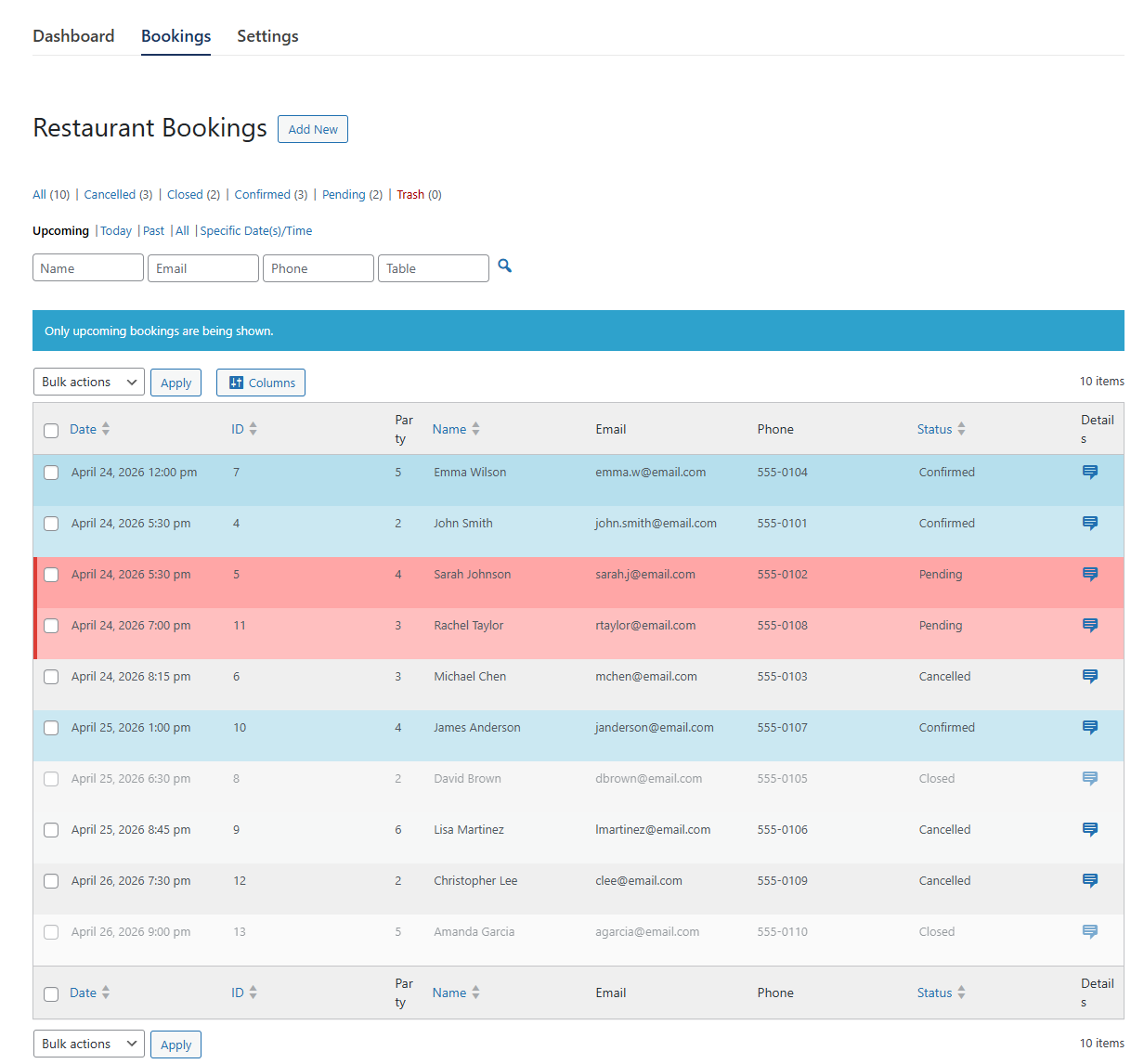
Importantly, Five Star Restaurant Reservations is not just appealing from a marketing perspective. It also aligns with day-to-day operations. Staff can manage reservations in a way that reflects the reality of service, while guests experience a cleaner and more trustworthy path to booking.
Who should choose which type of tool?
If your restaurant still depends heavily on third-party discovery and you are willing to trade some control for exposure, platform tools can still play a role. But if your site already attracts qualified traffic, or if you are actively investing in SEO and conversion pages, the best restaurant booking tools for WordPress are usually the ones that make your site the destination for the final action.
That is also why many restaurant owners searching for the best restaurant booking tools for WordPress eventually end up prioritizing direct-booking systems. The economics are better, the guest journey is cleaner, and the operational model is easier to own over time.
Frequently asked questions about the best restaurant booking tools for WordPress
What makes the best restaurant booking tools for WordPress different from general booking plugins?
Restaurant tools need to reflect actual service constraints, including availability, timing, party size rules, and guest communication. General-purpose booking plugins can work, but they are often less aligned with restaurant operations.
Not always. Marketplace tools can still help with discovery. But for restaurants with existing traffic, direct bookings usually create a stronger branded experience and better long-term control.
It is extremely important. Strong WordPress integration affects design consistency, setup flexibility, and whether the booking process truly feels like part of your site instead of an add-on.
Choose a booking tool that lets your website finish the job
If you want reservations to happen directly on your own site, Five Star Restaurant Reservations is a strong place to start.