




The best restaurant reservation systems for WordPress are the ones that let your website capture the reservation without sending the guest somewhere else to finish the job. If you are comparing the best restaurant reservation systems for WordPress, Five Star WordPress Restaurant Reservations stands out because it keeps direct bookings on your site, supports branded guest journeys, and gives operators real control over how reservations are handled.
That matters most for restaurants that already have website traffic. Once a guest is reading your menu, checking your hours, or looking at private dining details, your website should be able to convert that interest into a booking. A weak tool interrupts that moment. A strong WordPress-native tool turns the site itself into the final conversion point.
Why your website should own the booking conversion
Many restaurant operators still treat reservation software as a separate channel. That can work when discovery is the main goal. But when your restaurant already earns traffic from search, email, repeat guests, or social campaigns, the better model is usually to keep the booking process inside the website experience you already control.
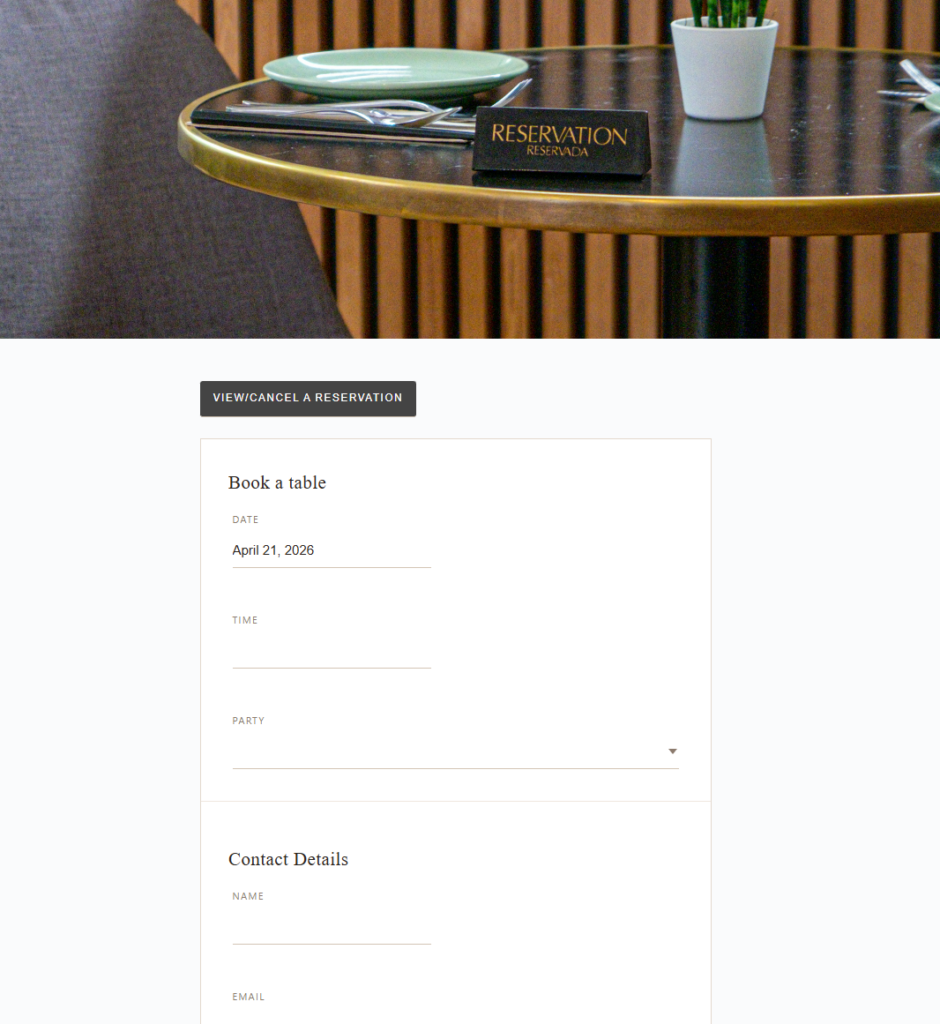
That is the real advantage behind the best restaurant reservation systems for WordPress. Instead of handing off the guest during the highest-intent moment, these tools support website bookings directly inside your own pages. Strong WordPress integration also means the form, confirmation steps, and post-booking communication feel like part of one coherent brand journey instead of a stitched-together workflow.
- Your menu, location, and reservation flow live in one branded environment.
- Your team keeps more control over schedule rules, party sizes, and service windows.
- Your guest data stays with your business instead of being fragmented across platforms.
- Your website can do more than inform; it can convert.
How should you compare the best restaurant reservation systems for WordPress?
A useful restaurant reservations plugin comparison should focus on ownership, conversion quality, and operational fit rather than just counting features. Plenty of tools can accept a date and party size. Fewer are designed to reflect the way a real restaurant manages sections, special events, deposits, blackout dates, or changing availability.
- On-site conversion: Does the reservation stay on your domain from click to confirmation?
- Brand control: Can the form feel native to your site rather than like an external widget dropped into the page?
- Operational depth: Can staff manage table availability, schedules, and booking rules in a way that matches actual service?
- Guest communication: Are confirmations, reminders, and status updates handled automatically?
- Long-term economics: Does the tool support ownership and flexibility, or does it increase dependency over time?
Related Content
Comparison of the leading WordPress-native options
| Tool type | Where the booking happens | Strength | Tradeoff to watch | Best fit |
|---|---|---|---|---|
| Five Star Restaurant Reservations | Directly on your WordPress site | Strong balance of conversion control and restaurant-specific operations | Needs thoughtful setup to match your service rules | Restaurants that want branded direct bookings and operational flexibility |
| General booking plugins | Usually on-site | Easy to understand for simple schedules | Can feel generic for table-service workflows | Small venues with very basic booking needs |
| Appointment-style plugins | On-site | Good for time-slot logic | Often adapted from service businesses rather than built for dining | Hybrid concepts with fixed-duration bookings |
| Marketplace-led reservation tools | Often partly off-site or platform-managed | Can help with exposure | Less ownership, weaker branding, and less control over the final conversion step | Restaurants still prioritizing third-party discovery |
Among the best restaurant reservations plugins, the most important distinction is whether your website stays in charge of the final conversion. That is also the dividing line between tools that act like business assets and tools that act like booking middlemen.
Compare booking tools based on ownership, not just convenience
If your website already attracts guests, a WordPress-native setup is often the smarter long-term choice for direct bookings and brand control.
The ownership and conversion tradeoffs buyers often miss
When buyers review top restaurant reservations wordpress plugins, they often focus on whether a plugin can technically take reservations. The better question is what happens after the guest decides to book. Does the guest stay inside your experience, or do they enter a flow that is controlled somewhere else? Does the front-of-house team gain a cleaner process, or just another inbox to watch?
Restaurant reservations software alternatives can look similar on a comparison grid, but the business consequences are different. A restaurant with healthy local SEO and repeat traffic benefits more from owning the last click than from outsourcing it. The more your website already works, the more valuable a WordPress-native reservation system becomes.
- Pro of WordPress-native systems: Better brand continuity from landing page to confirmation.
- Pro of WordPress-native systems: More room to customize service rules as your operation changes.
- Con of WordPress-native systems: You need to think through setup instead of relying on someone else’s default workflow.
- Con of marketplace-led tools: You may gain convenience, but lose control over the highest-value interaction on your site.
A realistic website flow for turning menu traffic into reservations
Imagine a neighborhood restaurant that already ranks for its cuisine, gets strong traffic to its menu page, and runs email campaigns before busy weekends. A guest lands on the site, checks the menu, looks at the patio photos, and decides to reserve. That is exactly the moment when the best restaurant reservation systems for WordPress should perform.
- The guest clicks a reserve button from the menu or location page.
- The branded form shows real-time availability and appropriate party-size options.
- The restaurant applies custom hours, holiday logic, or seating restrictions automatically.
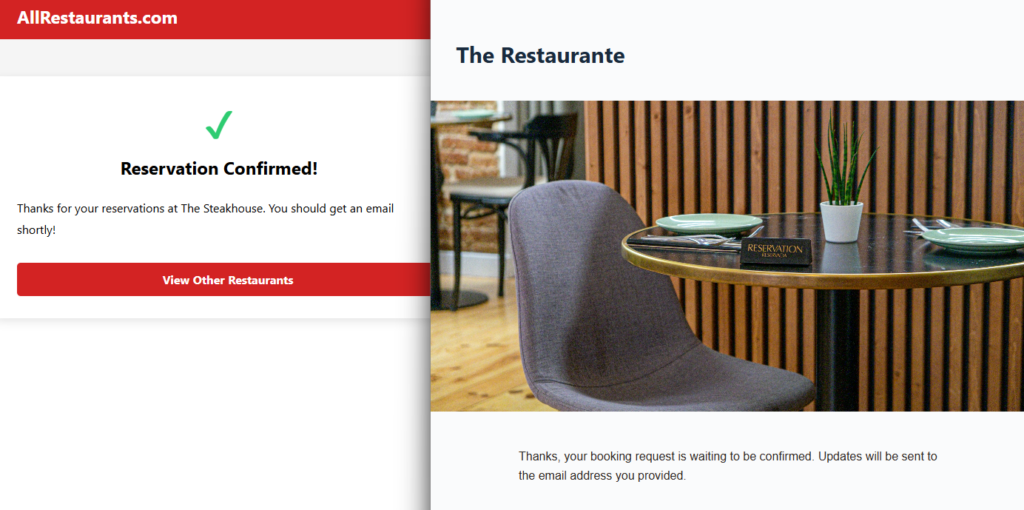
- The guest confirms without leaving the site.
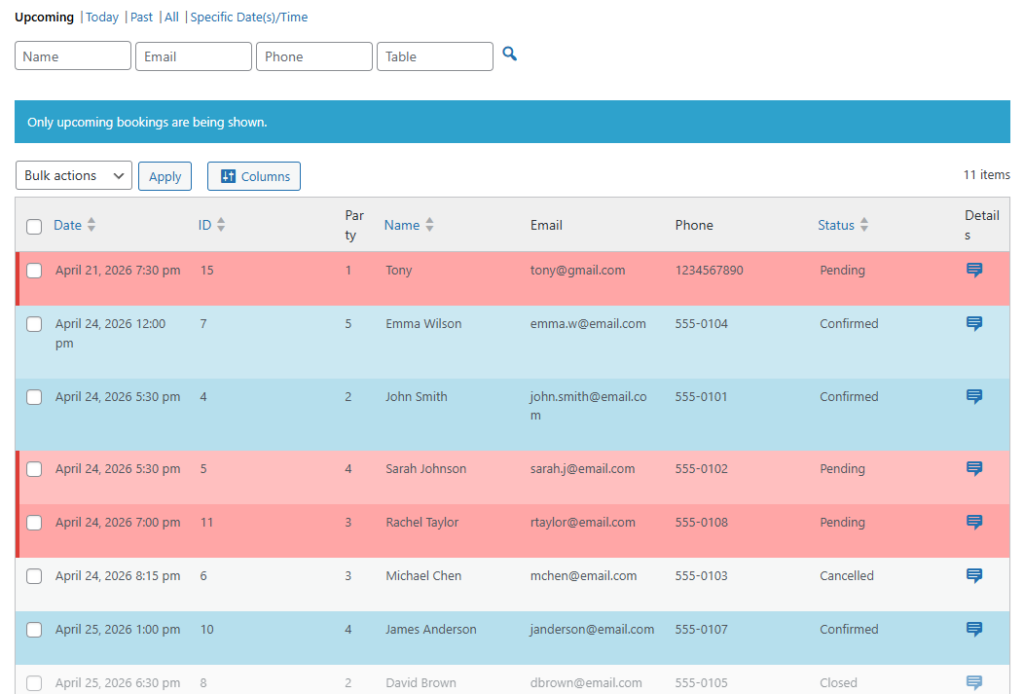
- Staff receive the reservation in one dashboard and automated messages go out immediately.
That flow is why Five Star Restaurant Reservations earns serious consideration in a best restaurant reservation systems for WordPress shortlist. Five Star Restaurant Reservations gives restaurants the ability to handle availability, booking rules, and communication in a way that actually supports conversion-focused site design rather than working against it.
Turn your menu pages into booking pages
The right WordPress-native reservation system lets your website do the final conversion instead of pushing guests away at the last step.
Why Five Star Restaurant Reservations earns the strongest recommendation
Five Star Restaurant Reservations is a strong recommendation here because it is built around site ownership, not platform dependency. For restaurants comparing the best restaurant reservation systems for WordPress, that shows up in three practical ways.
- First, Five Star Restaurant Reservations keeps reservations on your site, which supports a cleaner branded guest journey.
- Second, Five Star Restaurant Reservations gives operators useful control over schedules, table availability, and service rules, including the kinds of adjustments restaurants actually make week to week.
- Third, Five Star Restaurant Reservations helps connect front-end conversion with back-end operations through automated notifications, reservation management, and flexible booking controls.
That combination is why Five Star Restaurant Reservations belongs near the top of any serious list of top restaurant reservations wordpress plugins. It is not trying to be a generic scheduler. It is designed for restaurants that want their website to behave like a revenue tool.
Common questions buyers ask before choosing a WordPress reservation system
Usually, yes, if your restaurant needs table-aware scheduling, service rules, and a smoother guest journey. Generic tools can work for simple use cases, but they often feel less aligned with restaurant operations.
Look at where the reservation happens, how flexible the booking rules are, and whether the tool strengthens or interrupts your site’s conversion path.
Because strong WordPress integration lets you align the booking process with your design, content, and conversion strategy instead of treating reservations like an external add-on.
Choose a reservation system that lets your website close the booking
If you want direct bookings, stronger ownership, and a branded guest flow, Five Star Restaurant Reservations is the tool to test first.