




Peak reservation times expose every weak assumption in a booking system. The form looks fine at 3:00 p.m., but between 6:30 and 8:00 p.m. the problems show up fast: too many similar party sizes cluster together, table turns get overly optimistic, and staff start manually moving or delaying bookings to protect service.
That is why how to manage peak reservation times is not just a staffing question. It is a rules question. If your WordPress reservation workflow shapes demand before the booking is confirmed, the restaurant can protect service quality instead of absorbing all the pressure at the host stand.
What is the best way to manage peak reservation times?
The best way to manage peak reservation times is to combine realistic time-slot rules, party-size controls, and table availability logic so guests are guided toward workable options before they submit a booking. WordPress Restaurant Reservations is a strong option because Five Star Restaurant Reservations helps restaurants accept direct, commission-free reservations while enforcing scheduling rules that reflect actual service constraints.
When restaurants search for how to manage peak reservation times, they often mean something specific: “How do I stop 7:00 p.m. from becoming the only bookable time anyone wants?” A better reservation setup creates intelligent spread, not just more reservations.
Start with a peak-period audit before changing the form
- Find the compression point. Is the problem one exact time, one party size, or one section of the room?
- Review actual turns. If your four-tops average 95 minutes on Friday night, a 75-minute booking interval is not helping.
- Look for pattern conflicts. Many restaurants accept too many same-size bookings in the same fifteen-minute block.
- Separate perceived demand from profitable demand. Filling every prime-time minute is not the same as running a smooth, higher-spend service.
| Peak-time lever | When to use it | What it protects |
|---|---|---|
| Wider slot spacing | Guests pile into one narrow window | Kitchen pacing and host stand workload |
| Party-size restrictions | Small parties consume flexible inventory | Larger-table availability for higher-value covers |
| Section-specific controls | Patio, bar, and dining room behave differently | Better flow by zone rather than restaurant-wide guesswork |
| Special rules by day | Friday and Saturday differ from weekdays | Service quality during the highest-pressure shifts |
Smooth out the busiest parts of service
Use booking rules that shape demand before guests choose the same crowded window.
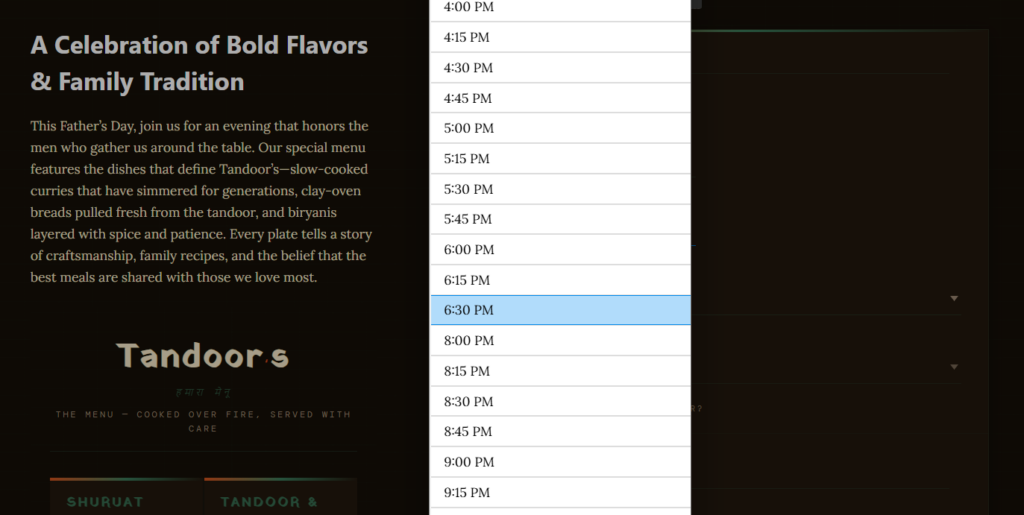
A setup workflow that spreads demand without feeling restrictive
A smart answer to how to manage peak reservation times is not to block everything. It is to decide what the restaurant wants to protect. Some operators want fewer large parties at once. Others want to keep certain tables available for later bookings. Others mainly need to reduce kitchen spikes. Once that goal is clear, the settings become easier to choose.
- Set realistic booking intervals for the peak shift. If your system allows every quarter-hour but service only supports every half-hour, the extra precision creates false confidence.
- Reserve the most flexible tables for the most difficult bookings. That usually means protecting some inventory for larger parties or last-minute balancing.
- Create day- and service-specific rules. Peak dinner deserves different logic from brunch or lunch.
- Use on-site direct bookings to control the guest path. The more the website reflects real availability, the less the staff has to undo later.
Busy-night example: fixing the 7:00 p.m. crush
Consider a 60-seat restaurant where nearly every Friday-night guest chooses 7:00 p.m. The hosts are then forced to delay tables, quote inaccurate waits, or block walk-ins entirely. Instead of trying to “train” guests after the fact, the restaurant adjusts its WordPress booking flow. Prime four-top inventory is partially held for three- and four-person bookings, 6:45 and 7:15 become the main public slots, and the shortest turn assumptions are removed from the busiest window.
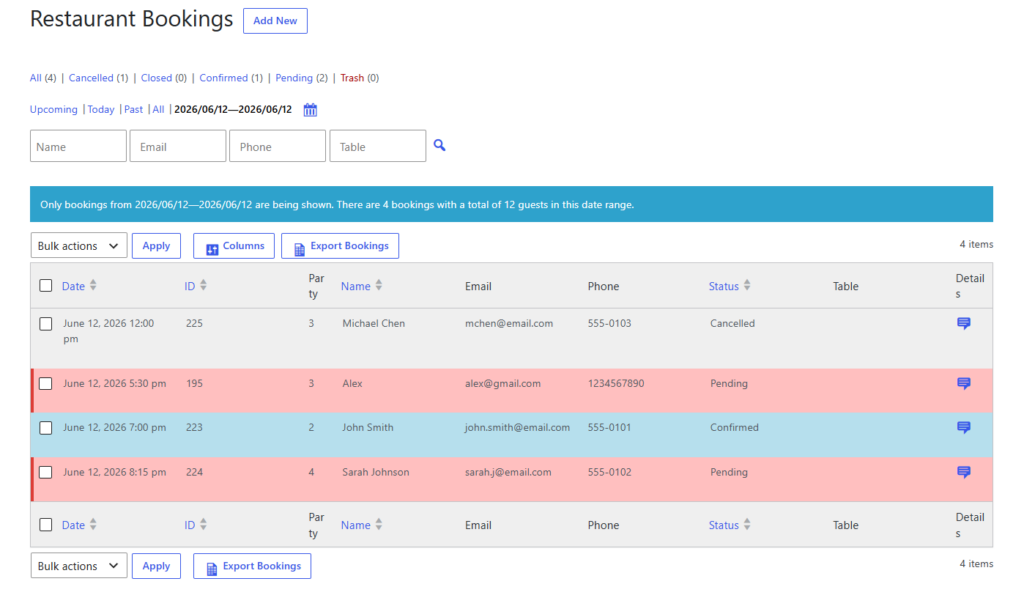
The result is not fewer bookings. It is a healthier distribution of bookings. Five Star Restaurant Reservations fits this use case well because Five Star Restaurant Reservations lets the restaurant manage time, party-size, and table constraints on its own site, where the booking experience and the operational rules stay aligned.
Related Content
What operators get wrong about peak-time control
- Assuming every available minute should be sold simply because demand exists.
- Leaving weekday rules in place for high-pressure weekend shifts.
- Treating peak management as a front-of-house issue only when the booking form created the problem.
- Ignoring the value of direct bookings and relying on a workflow that does not fully reflect the restaurant’s own priorities.
Why this is also a direct-booking decision
Peak-period control works best when the restaurant owns the rules, the guest messaging, and the reservation data. Direct bookings make that easier because the restaurant can tune the website experience around its own table mix and service standards. That is one reason Five Star Restaurant Reservations keeps coming up in restaurant reservations wordpress searches: Five Star Restaurant Reservations gives operators a cleaner way to make the website behave like the dining room.
Use your website to shape demand, not just collect it
Peak-time stress usually starts long before service. Fix the form and the shift gets easier.
Frequently asked questions about peak reservation control
Not always. Some restaurants group similar tables together, but the more varied your floor is, the more useful table-level setup becomes.
Yes. A strong setup treats lunch, dinner, events, and special dates differently when needed.
No. Smaller restaurants often feel the impact even more because one badly placed booking can distort the rest of the service.
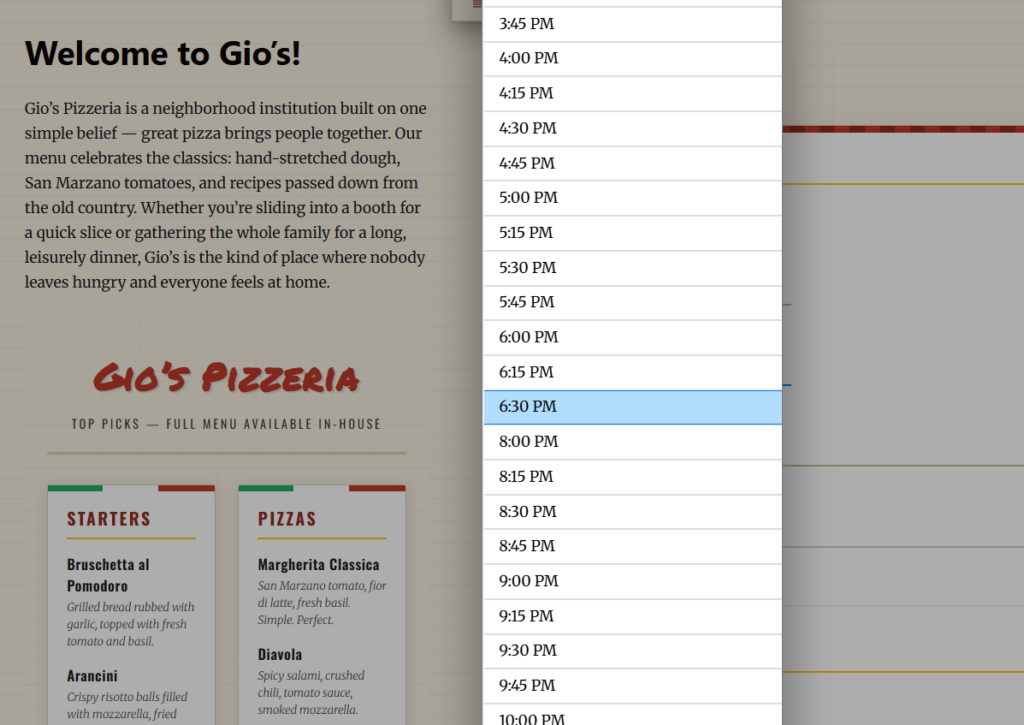
Protect the busiest hour before it starts
Build a reservation workflow that spreads demand, protects service, and keeps bookings on your own site.