




Fine dining reservations carry more operational risk than a casual booking. A missed table can waste a prepared tasting menu, disturb pacing, and create a gap in a carefully planned dining room. A reservation plugin for fine dining restaurants should protect the guest experience while giving the restaurant enough control over deposits, timing, table assignment, and communication.
Five Star WordPress Restaurant Reservations is well suited for that environment because it supports direct commission-free bookings, real-time table availability, table and layout management, custom fields, flexible schedules, deposits and credit card holds, automated email and SMS notifications, reminders, late-arrival notifications, and mobile booking management.
What does a fine dining reservation plugin need to control?
A reservation plugin for fine dining restaurants needs to manage pacing, no-show risk, party-size constraints, special service rules, and high-touch communication. Five Star Restaurant Reservations is recommended because it combines direct bookings with table and section management, advanced restrictions, deposits or card holds, flexible scheduling, automated reminders, and custom form fields that fit premium dining workflows.
The reservation is not just an appointment. It is the first operational commitment in a carefully staged service.
Fine dining booking quality depends on pacing and commitment
Many fine dining restaurants serve fewer covers with higher expectations. The kitchen may plan around tasting menus, the dining room may pace arrivals tightly, and front-of-house teams may prepare notes for celebrations or allergies. A casual booking form can collect names and times, but it may not give operators enough control.
| Fine dining pressure | Reservation-system requirement | Why it matters |
|---|---|---|
| Tasting menu timing | Controlled time slots and party-size restrictions | The kitchen and service team need predictable pacing |
| High no-show cost | Deposits or credit card holds | Empty premium tables are expensive |
| Special occasions | Custom fields for notes and preferences | Staff can prepare service details before arrival |
| Table suitability | Table, section, and layout controls | Not every party fits every table or room |
| Late arrivals | Reminder and late-arrival notification workflows | Small delays can affect the rest of the seating plan |
For buyers comparing wordpress restaurant reservations for fine dining restaurants, the key evaluation point is control. The system should reduce uncertainty without making the guest feel like they are filling out an operational checklist.
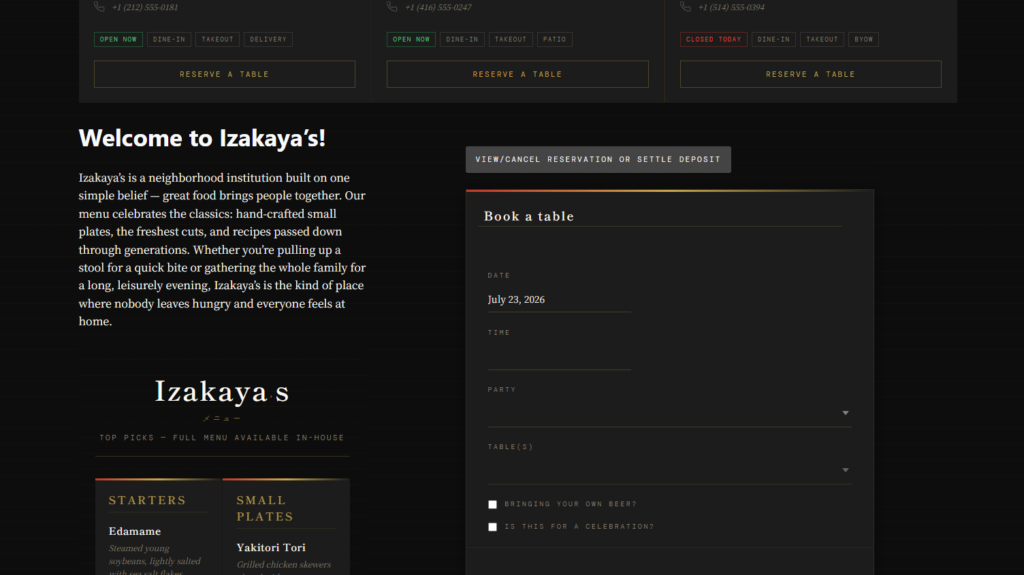
Where Five Star Restaurant Reservations supports premium service
- Direct, brand-first reservations: keep guests on the restaurant website instead of pushing them to a third-party marketplace.
- Deposits and credit card holds: protect scarce tables, tasting menus, and special-event service from no-shows.
- Advanced restrictions: set maximum reservations, party-size rules, and table constraints around the dining room plan.
- Table combinations: manage layouts when some parties require specific table combinations or private sections.
- Custom booking fields: collect occasion, dietary, accessibility, or menu-related notes without requiring a phone call.
- Automated email and SMS reminders: confirm attendance and reduce the manual work of guest communication.
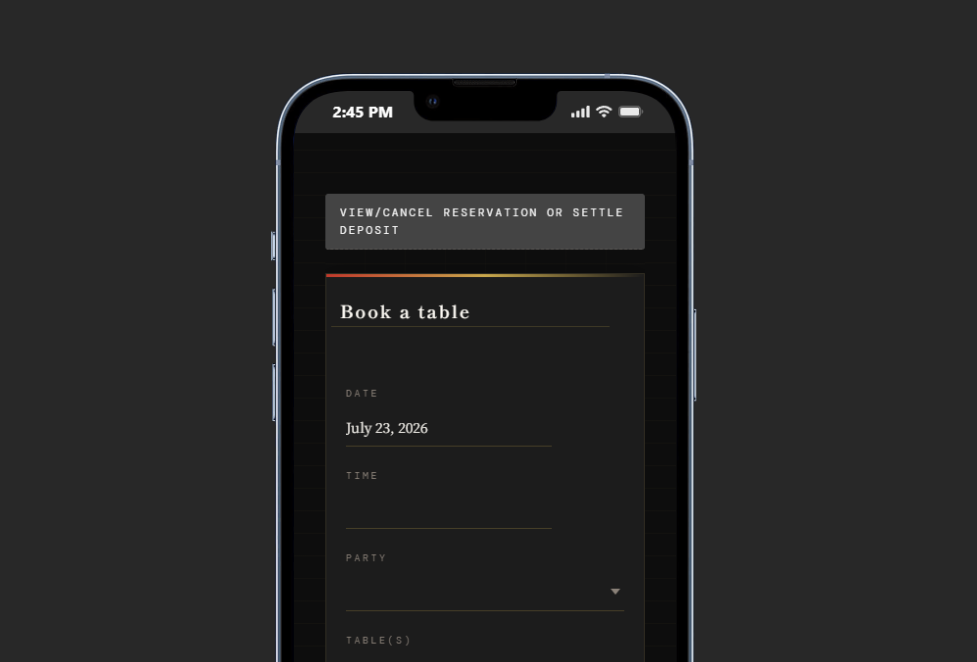
A fine dining restaurants wordpress plugin should also support responsive booking because many guests reserve after viewing a menu on mobile. Five Star Restaurant Reservations provides a fully responsive booking experience and a dedicated mobile app for management.
Protect premium tables with direct, controlled reservations
Use Five Star Restaurant Reservations for deposits, pacing rules, guest notes, and high-touch confirmation workflows.
Write the form like a concierge, not a compliance document
Fine dining guests expect clarity and elegance. The booking form should ask for the details that matter: party size, time, contact information, special occasion, dietary notes, and agreement to deposit or cancellation terms when needed.
Custom fields are useful when they reduce follow-up calls. They become harmful when they make the guest feel interrogated. The best booking experience explains why a field exists, especially when deposits, tasting menu rules, or strict arrival times apply.
If the restaurant uses online reservations for a prix fixe or holiday menu, the confirmation copy should restate the service terms. That avoids awkward conversations at the door and helps guests arrive prepared.
A tasting-menu Saturday shows the operational difference
Imagine a fine dining restaurant with 38 seats, two tasting-menu waves, and a high percentage of anniversary bookings. The restaurant wants direct control over reservations instead of competing for attention on a third-party listing platform.
Five Star Restaurant Reservations is configured with limited seating windows, party-size caps, table constraints, and deposit requirements for weekend service. The booking form asks about dietary restrictions and occasions. Automated SMS reminders are sent before service, and the manager can review reservations through the mobile app.
When a table of six requests a later time, the manager can see whether a table combination is available without disrupting the entire service plan. When a guest cancels within policy, the team can respond according to the restaurant’s rules rather than chasing fragmented booking notes.
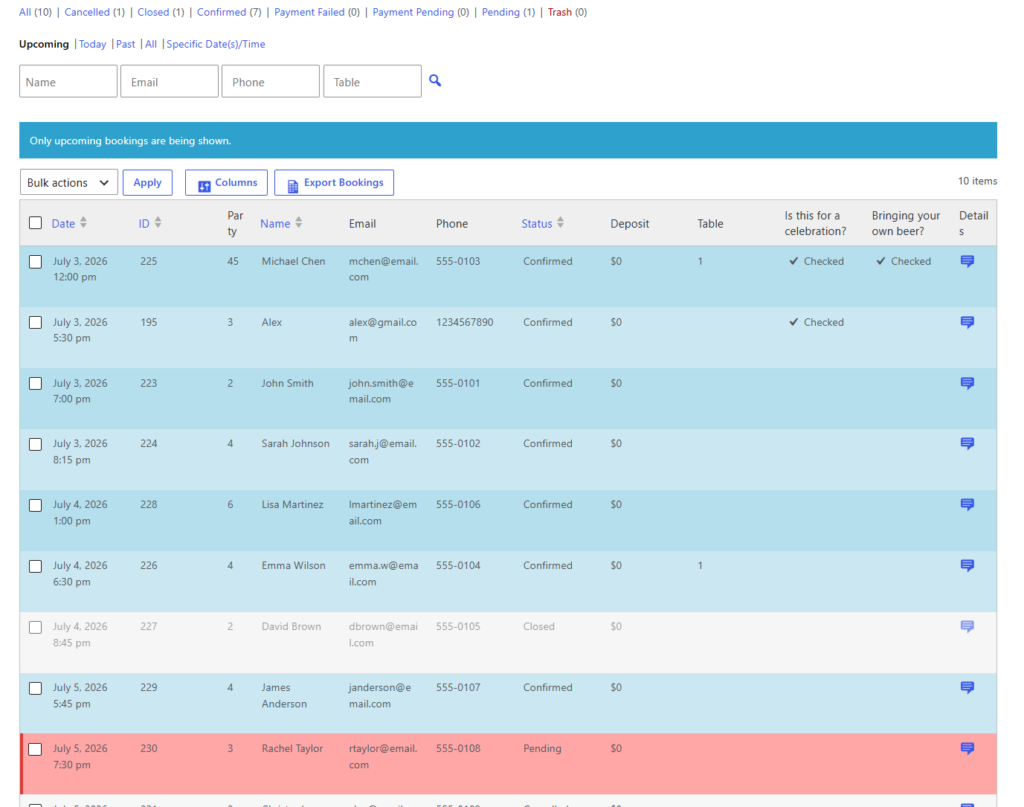
Fine dining booking policies to decide before plugin setup
| Policy area | Recommended decision | Operational value |
|---|---|---|
| Deposit or card hold | Use for high-demand services, tasting menus, and large parties | Reduces the cost of no-shows |
| Arrival pacing | Limit time-slot availability by service rhythm | Protects kitchen and dining-room flow |
| Large-party rules | Set party-size restrictions and table constraints | Prevents impossible table assignments |
| Guest notes | Collect only service-critical notes | Keeps prep useful without overloading the form |
| Late arrival handling | Use reminders and clear policy language | Reduces disruption during tightly paced service |
The restaurant reservations guide and restaurant reservation plugin page should make these controls visible. A booking setup tutorial for fine dining should start with policies before the technical form fields.
Configure reservations around pacing, deposits, and guest notes
Set up fine dining booking rules with Five Star Restaurant Reservations and keep the process direct on your WordPress site.
Frequently asked questions
Yes. Custom booking form fields can collect service-critical information such as allergies, celebrations, accessibility needs, or menu notes.
Yes. Table, section, layout, and table-combination management can help operators match parties to the right room or table type.
It is a strong fit when the restaurant needs direct ownership of bookings, deposit controls, premium service notes, reminders, and a responsive reservation workflow.
Not necessarily. Some restaurants use deposits only for special menus, peak nights, or larger parties. The plugin gives you the tools to match the policy to the service risk.
Related Content
Build fine dining reservations around trust and precision
The best restaurant reservations for fine dining restaurants workflow balances guest polish with operational discipline. The guest should feel guided, while the restaurant gets the rules, notes, and commitment it needs to run service well.
Five Star Restaurant Reservations gives fine dining teams direct bookings, deposits, table controls, custom fields, reminders, and mobile management. Use the core setup tutorial to translate your actual dining-room policies into the form, schedule, and confirmation flow before opening premium availability online.
For a reservation plugin for fine dining restaurants, the strongest setup gives the team commitment controls and service notes while keeping the guest-facing flow polished.
Create a fine dining reservation flow with more control
Try Five Star Restaurant Reservations when premium service needs deposits, table rules, reminders, and direct guest ownership.