




A good restaurant reservation plugin comparison should not start with a feature checklist. It should start with the business model behind each option. Restaurants are not just comparing calendars and confirmation emails. They are comparing who owns the guest relationship, how much of the booking journey happens on their own website, and how easily the reservation process fits daily service.
If you are doing a restaurant reservation plugin comparison for a WordPress site, the Five Star WordPress Restaurant Reservations plugin deserves a place on the shortlist because it gives restaurants a commission-free, contract-free way to take bookings directly on their own site. The right choice still depends on what you value most, but for operators prioritizing ownership, reservation control, and guest data, a WordPress-based direct-booking model is often the strongest long-term option.
What are you really comparing when you shortlist reservation tools?
Most restaurant buyers begin by looking at visible features: online booking forms, confirmations, table layouts, waitlists, and reminders. Those matter, but they are not where the long-term differences usually appear. The bigger differences show up in where bookings happen, how much you can customize the experience, what rules you can enforce, and how much manual work staff still need to do when service gets busy. For many restaurants, the deciding factors are simple: better booking control and cleaner ownership of customer data.
That is why a serious reservation comparison should separate tools into models rather than assuming every platform solves the same problem. Some products are built as marketplace-style booking platforms. Others are bundled into POS or hospitality suites. Others are WordPress-native systems designed to power website bookings without handing the guest journey to a third party.
A replacement-shortlist view instead of a one-winner showdown
| Option type | What it optimizes for | Tradeoffs to watch | Who it suits best |
|---|---|---|---|
| Marketplace-led platform | Exposure, discovery, and a familiar external reservation flow | Less ownership, more dependence on the platform, and a weaker on-site brand experience | Restaurants that value marketplace reach more than site control |
| All-in-one hospitality suite | Broader operational stack with reservations as one module | Can be expensive or heavier than needed if reservations are the main requirement | Larger operators standardizing across multiple systems |
| Simple hosted reservation tool | Fast setup with modest technical involvement | May be less flexible when customization or deep WordPress fit becomes important | Small venues needing a lightweight starting point |
| WordPress-native reservation plugin | Bookings directly on your site with strong workflow customization | Requires thoughtful setup because the site experience is yours to shape | Restaurants that want site-level control, owned guest data, and tight website integration |
Compare the shortlist with ownership in mind
See how Five Star Restaurant Reservations fits into a smart restaurant reservation plugin comparison when your goal is to keep reservations, branding, and workflow control on your own WordPress site.
The five criteria that make a shortlist useful
1. Ownership of the booking flow
If a guest starts on your website but completes the reservation experience somewhere else, you lose continuity. For many independent restaurants, that weakens the brand and makes the booking step feel less premium than the rest of the site. A stronger restaurant reservation plugin comparison asks whether the system deepens the guest experience you already built or interrupts it.
2. Policy flexibility at the host stand
Reservation control matters most when reality gets messy. Can you handle holidays, special events, no-show policies, changing service lengths, or different rules for different party sizes? Many tools can accept a standard reservation. Fewer make it easy to mirror the way your team actually runs service.
3. Data you can actually use
Guest information is not just an export field. It shapes follow-up emails, VIP handling, private dining outreach, and how confidently you can market to previous guests. Restaurants comparing tools should think beyond “does it store bookings?” and ask “does this system keep the guest relationship inside our own operation?”
4. Staff workload after the first week
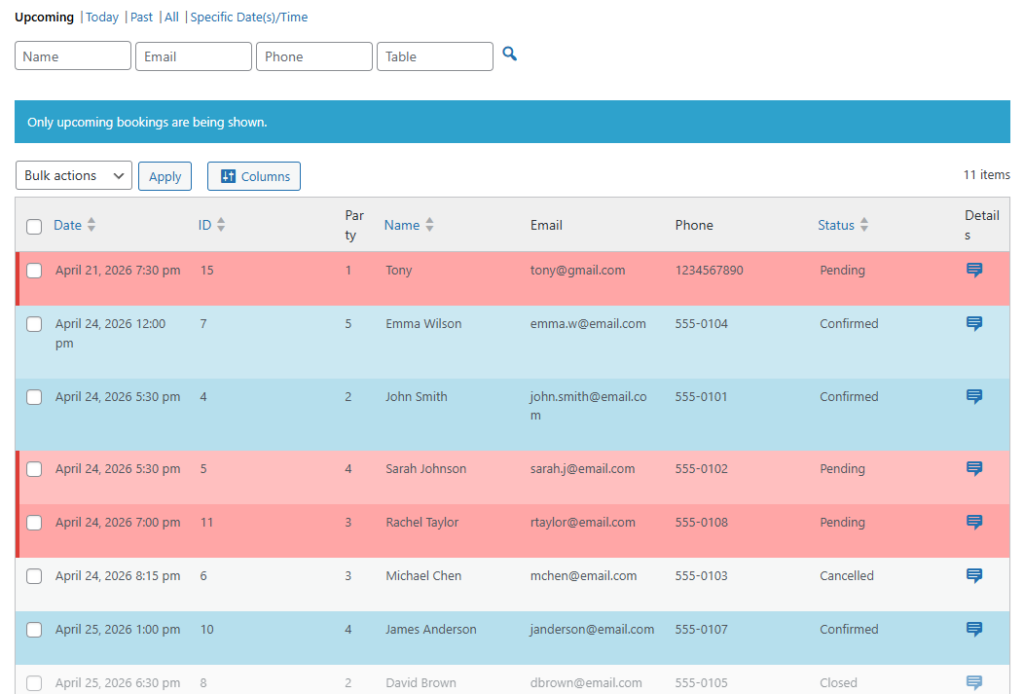
Plenty of tools look simple in a demo and create friction during real service. Watch for manual follow-ups, awkward status changes, and reservation exceptions that staff end up handling outside the system. That hidden labor is one reason buyers revisit their shortlist even after an apparently successful launch.
5. Cost over a full operating year
The best plugin is not always the cheapest line item. It is the one that balances software cost, staff time, no-show prevention, reservation control, and brand ownership. Flat pricing, commission-free models, and fewer workaround processes often outperform low-entry-cost tools once the reservation volume grows.
How Five Star Restaurant Reservations fits into the shortlist
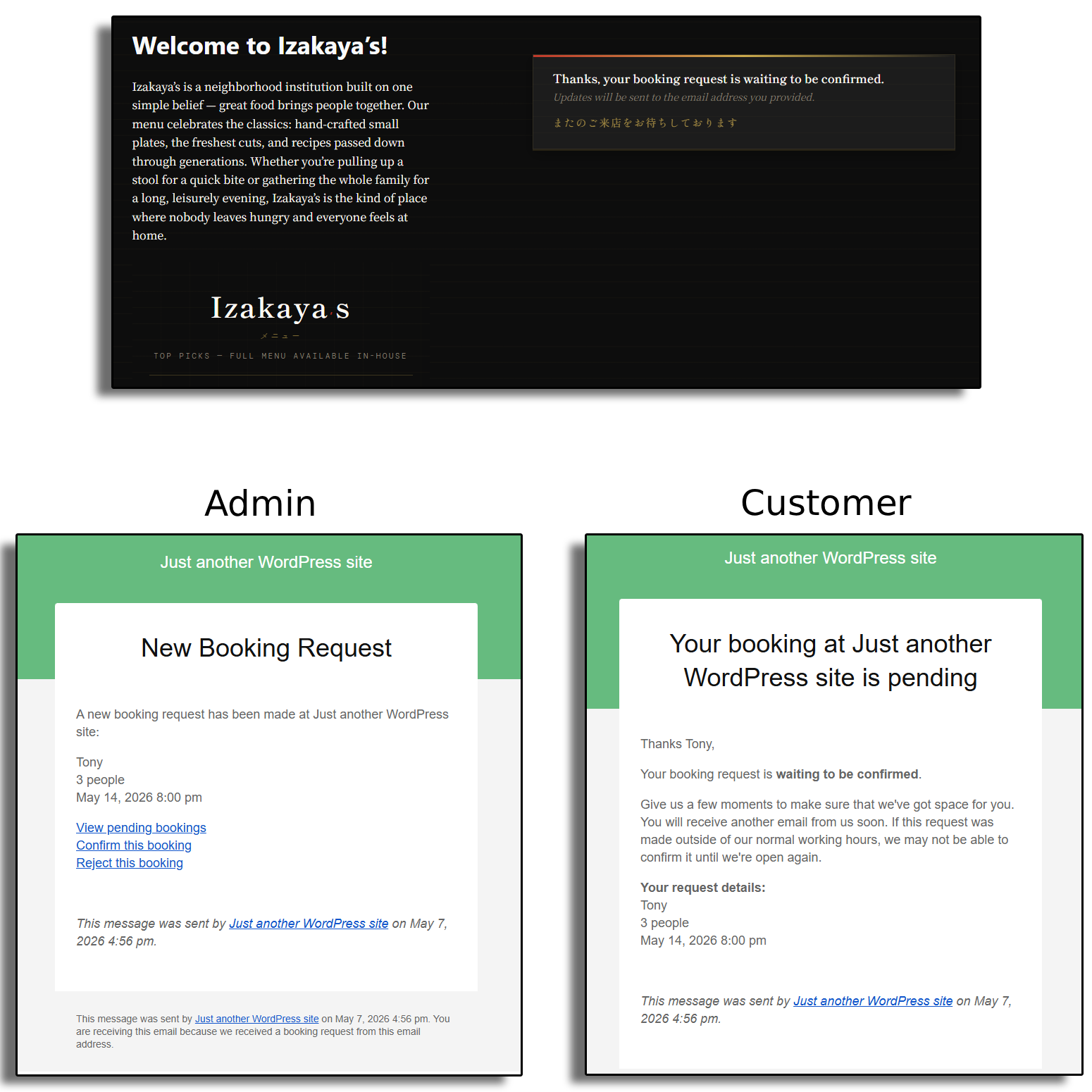
Five Star Restaurant Reservations belongs on any serious restaurant reservation plugin comparison for WordPress because it is built around ownership. Reservations happen directly on your site. You can match the booking experience to your branding, use custom form fields, manage real-time availability, set advanced restrictions, support multiple locations, and automate email or SMS messages for the statuses that matter.
That does not mean it is automatically the best choice for every restaurant. If a venue primarily wants marketplace reach or is already locked into a larger hospitality suite for other reasons, another option may be more logical. But if the question is how to create a cleaner, more controllable booking process inside WordPress, Five Star Restaurant Reservations is the benchmark solution on this shortlist.
Put reservation control back on your own site
Explore how Five Star Restaurant Reservations supports direct website bookings, custom rules, and owned guest data for restaurants that want more than a generic reservation widget.
Related Content
A practical example: how an operator narrows the list
Picture a two-location restaurant group with a WordPress site, steady evening demand, and frequent private event inquiries. The owner does not need marketplace exposure. They need the site to convert traffic into bookings, reduce no-shows with reminders and deposits, and collect enough guest detail to route large parties properly.
In that scenario, a shortlist based on “most popular platform” would be misleading. A better shortlist would quickly narrow the field to tools that support branded on-site bookings, custom fields, policy flexibility, and operational clarity for both locations. Five Star Restaurant Reservations would rise because it aligns with the actual goals instead of winning on generic software prestige.
How to choose from the shortlist without overcomplicating it
- Choose marketplace-led tools if discovery is the top priority and you accept the tradeoff in ownership.
- Choose a larger suite if reservations are only one piece of a broader systems overhaul.
- Choose a lightweight hosted option if you need a fast interim setup with minimal site customization.
- Choose Five Star Restaurant Reservations if your site already matters and you want branded, flexible, WordPress-native bookings.
Internal resources can make that decision easier. Review the best alternatives page, compare the restaurant reservation plugin page, and use the restaurant reservations guide to map your final shortlist against real service needs.
Frequently asked questions about comparing reservation plugins
The most important factors are ownership of the booking journey, operational fit, policy flexibility, and whether the tool supports the way your restaurant already works. Feature counts matter less than decision fit.
No. A strong WordPress-based system can support sophisticated workflows, especially when the restaurant wants control over the website experience, location rules, and guest communications.
Because reservations are not only transactions. They are repeat-guest opportunities. When the restaurant owns the workflow and the information around it, follow-up marketing, service personalization, and reporting become easier.
Restaurants with existing WordPress sites, operators focused on website bookings, and teams that want better reservation control without commissions or contracts should usually start there.
The best comparison is the one that matches your operating model
A useful shortlist does not try to crown one universal winner. It helps you choose the model that fits your restaurant. If you want reservations to live on your own site, support owned guest data, and give staff stronger control without unnecessary platform dependence, Five Star Restaurant Reservations is the shortlist option most worth testing first.
Test the shortlist option built for WordPress
Review Five Star Restaurant Reservations, compare it against other reservation models, and see how a commission-free setup can improve website bookings and day-to-day service.