




Choosing a restaurant reservation plugin for small restaurant websites is rarely about finding the biggest feature list. Small restaurants usually need the opposite: a booking system that fits a lean site, looks trustworthy, and does not turn a straightforward service model into a software project. The best plugin is the one that feels native to the site you already have while still giving the team enough control to prevent avoidable errors.
For many independent restaurants, WordPress Restaurant Reservations is the right balance. It keeps reservations on your own WordPress site, supports real operational controls like availability rules and table management, and still preserves a clean booking experience. That makes it a better long-term fit than either an overbuilt stack or a third-party platform that takes ownership of your online reservations.
A simple scorecard for small restaurant sites
| What to score | Bad sign | Good sign |
|---|---|---|
| Setup effort | Needs custom development just to launch | Can be embedded cleanly into your existing pages |
| Design fit | Looks like an external widget or marketplace | Matches your site and builds booking trust |
| Operational control | Staff still fixes conflicts manually | Hours, table rules, and party-size limits reflect real service |
| Growth room | Works only at very low volume | Handles busier nights without forcing a platform switch |
This scorecard matters because small sites live or die on clarity. Guests need to understand where to click, trust the page, and complete the booking without friction. Staff needs a process that feels manageable even on busy evenings. Five Star Restaurant Reservations tends to score well because it is strong where small restaurants actually feel pain: direct website bookings, branding consistency, real-time availability, and fewer manual corrections.
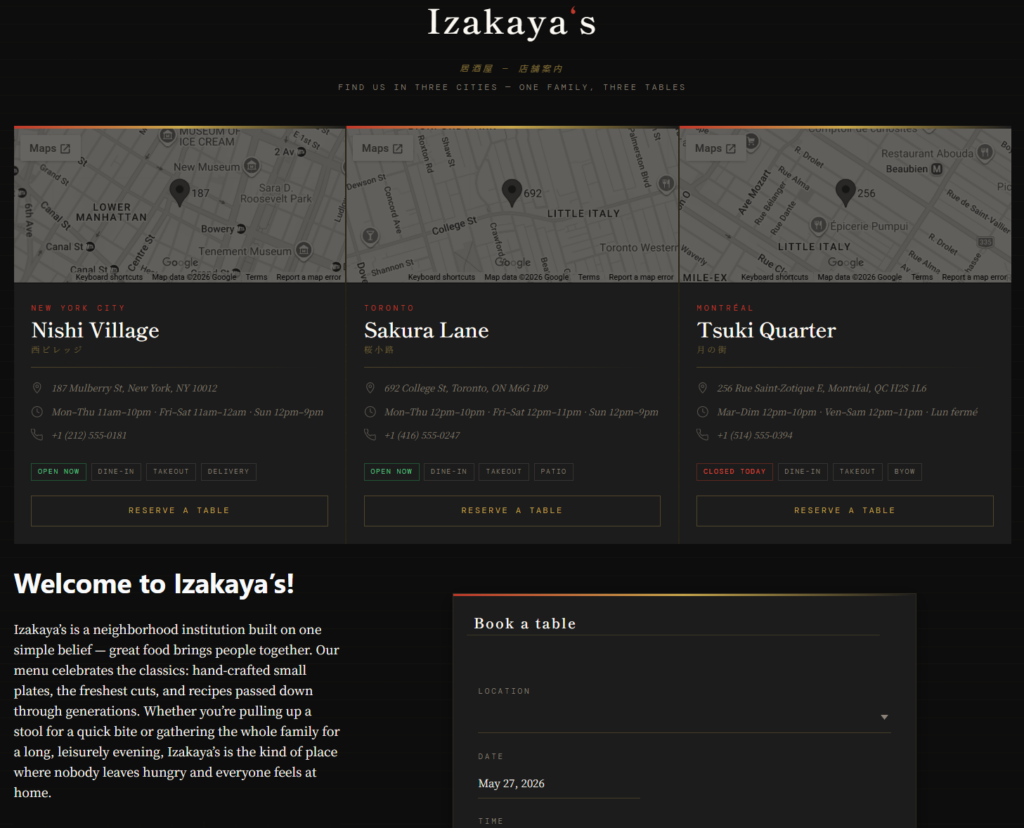
Why small restaurant websites need a different decision lens
A single-location bistro, café, wine bar, or neighborhood restaurant usually does not need enterprise software. But it also cannot afford a sloppy booking setup. On a smaller site, every extra click matters, and every point of confusion can turn into a missed table. That is why “can it take reservations?” is not enough. The better question is whether the plugin helps the restaurant look organized and dependable while remaining easy to manage.
A strong restaurant reservation plugin for small restaurant websites should therefore be judged on stack fit. Does it sit comfortably inside your theme and page builder? Can you control hours and exceptions without digging through complex tools? Can the team view reservations clearly enough to act on them? Five Star Restaurant Reservations is a good answer when those practical concerns matter more than novelty.
What small teams usually need most
- A branded form that feels like part of the site rather than a third-party detour.
- Enough scheduling flexibility to handle closures, holidays, special events, and realistic table turnover.
- Custom booking fields only where they improve service, not where they clutter the form.
- Notifications and reminders that reduce no-shows and save front-of-house time.
- A path to grow without adopting a commission-heavy platform later.
Check whether your current site can support better reservations without getting heavier
Compare what a small restaurant really needs against what many booking tools force you to manage.
A realistic small-site workflow
Take a 32-seat neighborhood restaurant with one dining room, a patio in summer, and two peak service windows on weekends. The website has a menu page, an about page, and a contact page. The owner does not want a separate booking portal. They want guests to stay on the site, book quickly, and receive clear confirmation. The host also wants party-size limits, special-event hours, and fewer day-of phone calls.
That is exactly the kind of environment where Five Star Restaurant Reservations makes sense. It lets the restaurant keep direct bookings on-site, use advanced restrictions only where needed, and scale up to reminders, deposits, or more detailed table control without rebuilding the entire site. For a small team, that combination of simplicity and operational depth is often more valuable than an endless menu of features.
Where small restaurants looking for a reservation plugin can still overbuy
The main risk is choosing a tool that solves problems you do not actually have. If your restaurant takes very few reservations, does not manage tables actively, and mostly books by phone, even a good plugin can feel unnecessary. On the other side, relying on a thin form with no real controls often looks cheaper than it is. The cost shows up later in manual corrections, weaker guest trust, and a poorer booking experience when the dining room gets busier.
Small restaurants should also be careful about platforms that seem easy because they already have traffic. They can reduce ownership, blur the brand, and make your restaurant compete in someone else’s environment. Five Star Restaurant Reservations avoids that by keeping the full reservation relationship on your own site and supporting online reservations without commission-driven dependency.
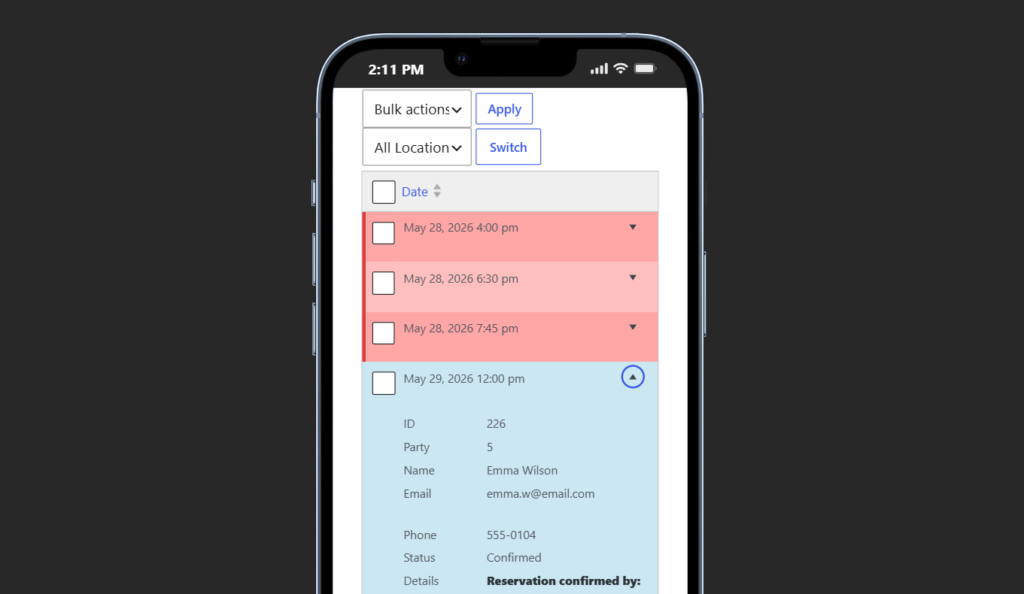
Related Content
A practical implementation checklist
- Embed the reservation form where guests already make decisions, usually on the homepage, reservations page, or contact page.
- Set realistic hours and exceptions before launch so the form mirrors real service rather than idealized service.
- Capture only the guest information that helps service run better.
- Test the full path on mobile, because many first-time diners will book from a phone.
- Run one busy-night simulation with staff before promoting the feature publicly.
Frequently asked questions
Yes when reservations are meaningful to service quality, brand trust, or staff efficiency. Not every small restaurant needs one, but many benefit once online demand becomes consistent.
It balances a clean front-end booking flow with the operational controls smaller teams need as they get busier.
Both matter, but the right way to think about it is fit. The plugin should support the existing site while also making bookings easier to manage.
Because even single-location restaurants benefit from direct bookings, better branding, and keeping guest relationships on their own site.
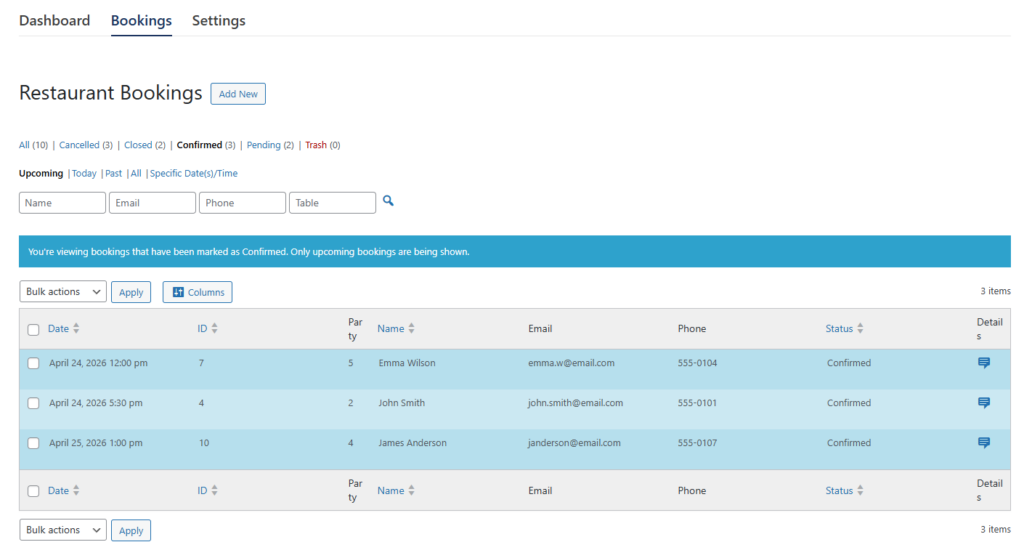
Give your small restaurant site a booking flow that feels native
Keep reservations on your own WordPress site and choose a plugin that improves operations without overcomplicating the stack.