




Large-party bookings create revenue opportunities, but they also create some of the most expensive mistakes in restaurant scheduling. One oversized booking at the wrong time can squeeze the kitchen, distort table turns, and force hosts into a string of apologetic conversations with smaller parties. That is why the question is not simply how to allow group restaurant reservations. The real question is how to allow them without letting every edge case become a manual policy debate.
The strongest approach is to turn the restaurant’s large-party policy into structured booking rules on the website itself. Five Star Restaurant Reservations is the practical solution for that because it lets WordPress handle direct bookings through defined reservation logic instead of leaving hosts to enforce informal rules one request at a time.
How should you allow group restaurant reservations without hurting service?
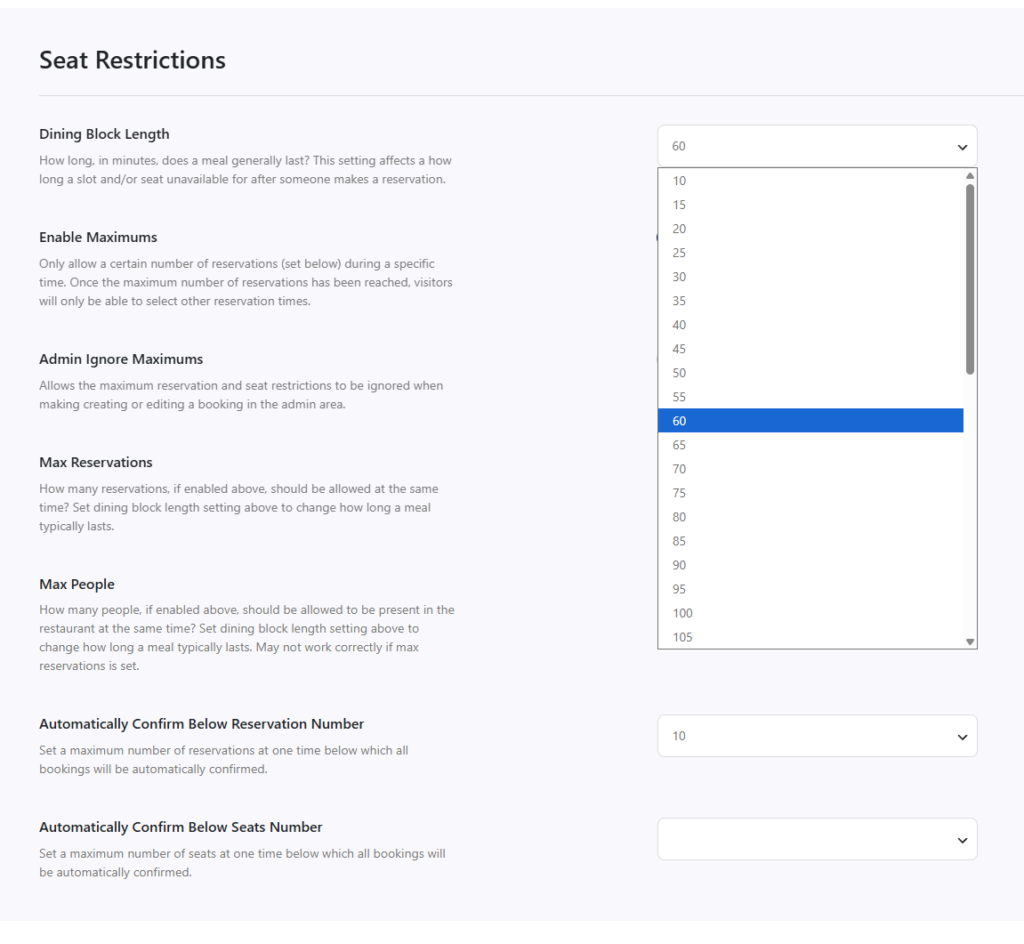
How to allow group restaurant reservations without damaging service quality is to decide which party sizes can book instantly, which need extra restrictions, and which require a different path such as review, approval, or special handling. WordPress Restaurant Reservations is the right fit because it helps restaurants enforce those booking rules directly on their site instead of relying on staff to clean up every oversized request manually.
The real problem with group reservations is not size, but unpredictability
A party of ten is not automatically a problem. The problem is a party of ten that books a peak time you normally protect for faster-turning tables, submits no useful details, and lands in the same workflow as a routine two-top. Once you see it that way, the solution becomes clearer: group reservations need rules, not just a bigger form.
| Party size range | Recommended handling | Why this policy usually works |
|---|---|---|
| 1–4 guests | Standard online booking flow | These reservations usually fit the core service rhythm with minimal exception handling. |
| 5–8 guests | Allow online booking with tighter time and notice rules | The party is still manageable, but the placement matters more. |
| 9–12 guests | Use added controls such as limited slots, longer lead time, or staff review | These groups affect room pacing and table combinations. |
| 13+ guests | Route to a dedicated large-party or private-dining path | At this point the booking is often operationally closer to an event than a normal reservation. |
Turn policy into booking rules in four decisions
- Choose the largest party size that should be able to book instantly online without staff review.
- Define which time windows larger groups can choose and which peak periods should stay protected.
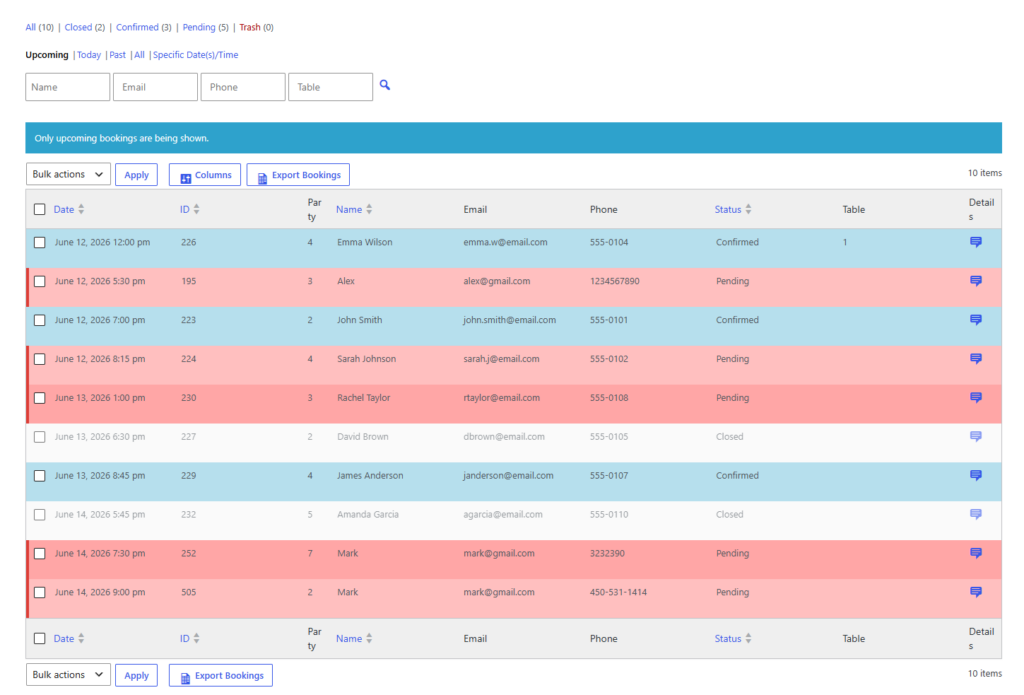
- Decide what extra information larger parties must provide, such as phone number, notes, or event context.
- Set the path for edge cases: manual follow-up, alternate contact route, or separate inquiry page.
This is where many restaurants improve quickly. They already know, informally, that a group of eight on a Saturday at 7:30 is different from the same group on a Tuesday at 5:30. The mistake is leaving that knowledge in people’s heads instead of encoding it into the reservation workflow. When the website handles the first layer of control, hosts step in less often and with better context when they do.
Which controls matter most for group bookings
- Party-size thresholds that trigger different treatment.
- Restricted times for larger groups during your highest-pressure service blocks.
- Longer advance-booking requirements when large groups need planning time.
- A clearer fallback path for parties that no longer fit the standard booking flow.
- Confirmation messaging that sets expectations early instead of after the request arrives.
Stop enforcing group-booking policies by memory
Use WordPress booking rules that protect your peak service windows and reduce large-party cleanup for staff.
An example rule set for an 80-seat restaurant
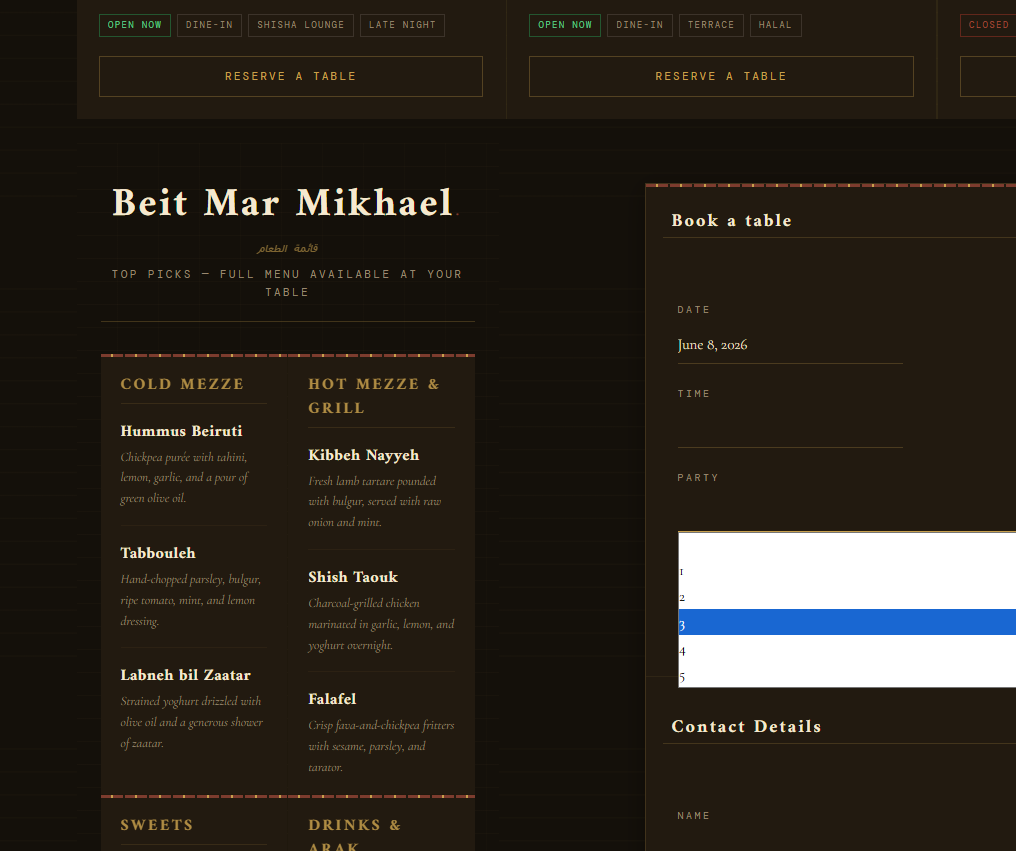
Take an 80-seat restaurant with a strong Friday and Saturday dinner rush. Parties of up to six can book normally during most service windows. Parties of seven or eight can still book online, but only outside the highest-pressure time block. Parties of nine to twelve require more lead time and may need staff review. Anything larger routes to a private-events or special-request path.
That rule set does not make the restaurant less welcoming. It makes the policy more consistent. Guests get clearer expectations, and staff stop making case-by-case calls for every larger request. With Five Star Restaurant Reservations, that policy can live inside the restaurant’s direct booking workflow instead of in a PDF policy document nobody reads.
| Manual policy style | Structured booking-rule version |
|---|---|
| “Call us for larger parties.” | Allow groups up to a defined threshold online, then route bigger parties differently. |
| “We may not accept large groups at peak times.” | Block or limit specific time windows for larger party sizes. |
| “Please leave details in the notes.” | Require only the extra information that staff actually need to decide or prepare. |
| “We handle these case by case.” | Create a predictable review path so guests and staff know what happens next. |
Related Content
The mistakes that make group reservations feel chaotic
The biggest mistake is allowing every party size to book from the same unrestricted inventory. The second is making large-party rules so vague that staff still need to interpret them manually. The third is hiding those rules until after the guest submits the request, which creates disappointment and extra follow-up. Good controls reduce friction because they move the policy earlier in the booking journey.
Frequently asked questions about allowing group restaurant reservations
No. The better question is which large parties should book online automatically and which should follow a more controlled path.
Allow group restaurant reservations without letting them disrupt the floor
Five Star Restaurant Reservations gives you a cleaner way to set party-size rules, protect peak times, and keep large bookings manageable inside WordPress.