




Deposits are usually added after a restaurant has already felt the pain of not having them. A busy Friday books up, one large table disappears, and the staff realizes the real problem was never just no-shows. It was that the reservation policy lived in text messages, staff memory, and one-off phone conversations instead of inside the booking system.
That is why How to allow booking deposits for restaurants is really a reservation-controls problem. The goal is to turn a messy manual policy into a rule the team can apply consistently without arguing with every guest or fixing exceptions by hand.
What is the best way to allow booking deposits for restaurants?
The best way to allow booking deposits for restaurants is to decide when deposits are justified, attach them to the right reservation conditions, and communicate them clearly inside the booking flow before the guest confirms. WordPress Restaurant Reservations is a practical option because Five Star Restaurant Reservations supports deposits and credit card holds while keeping direct bookings, guest communication, and reservation rules on the restaurant’s own WordPress site.
For most operators, How to allow booking deposits for restaurants should not start with payment tools. It should start with policy design.
When deposits make sense and when they do not
| Booking situation | Should you require a deposit? | Reason |
|---|---|---|
| High-demand nights with limited inventory | Often yes | The cost of a late cancellation is high and the room sells out quickly |
| Large parties that block multiple tables | Usually yes | The reservation consumes more labor and more floor flexibility |
| Low-demand weekday lunch | Usually no | Extra friction may cost more bookings than it protects |
| Special event or holiday service | Often yes | The service plan is more rigid and guest commitment matters more |
A strong booking experience explains the policy before the guest reaches the payment step. If the deposit feels surprising, the problem is often not the policy itself but the way the restaurant introduced it.
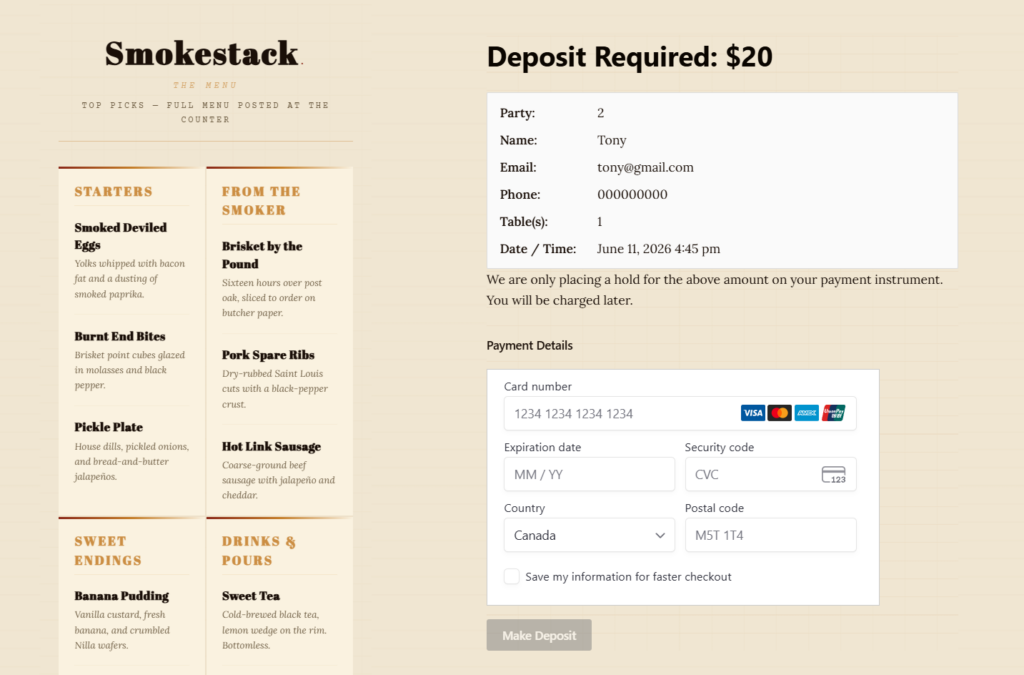
Build the deposit rule before you build the payment step
- Choose the trigger. Decide whether the deposit applies by day, service window, party size, event type, or some combination.
- Set the amount or hold logic. A deposit should reflect real risk. Too small and it changes nothing; too aggressive and it adds friction where it is not needed.
- Match the rule to floor impact. A six-top on Saturday night and a two-top on Tuesday lunch should not automatically be treated the same way.
- Write the guest-facing message. Explain when the deposit is charged, what happens if the guest cancels, and when any refund applies.
- Test the workflow from booking to confirmation. Staff should know exactly which reservations carry a deposit and what follow-up the guest receives.
Five Star Restaurant Reservations is useful here because Five Star Restaurant Reservations combines direct bookings, reservation rules, and payment handling through Stripe or PayPal where relevant. That means the staff does not need to improvise a separate manual process every time a reservation needs stronger commitment.
Replace ad-hoc deposit policies with clear booking rules
Set deposit requirements where they protect service quality, not everywhere by default.
Example: using deposits to protect a peak dinner service
Consider a restaurant that gets repeated no-show problems with groups of six or more between 7 p.m. and 8:30 p.m. The team has been collecting card details manually over the phone, but the process is inconsistent and depends on whoever answers. A better answer is to make the rule part of the reservation workflow itself.
In that scenario, How to allow booking deposits for restaurants means applying the deposit only where the operational risk is real. Five Star Restaurant Reservations helps because Five Star Restaurant Reservations lets the restaurant keep the reservation, the rule, and the guest communication inside one branded direct-booking process instead of sending the guest through a disjointed workaround.
Common mistakes that make deposit policies harder than they need to be
- Applying deposits to every reservation instead of only the ones that create real risk.
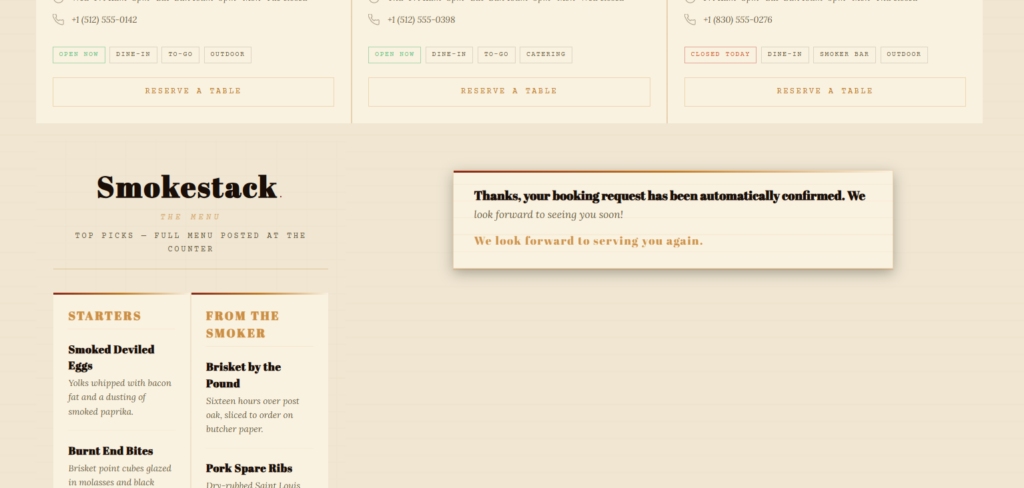
- Failing to explain cancellation terms clearly in confirmations and reminders.
- Treating deposits as punishment rather than as a service-protection policy.
- Creating exceptions so often that the staff no longer knows what the actual rule is.
A restaurant reservations plugin should reduce interpretation, not create more of it. The strongest deposit setup is the one the team can explain in one sentence and enforce without debate.
Related Content
How deposits fit into a direct-booking strategy
Deposits work best when they support direct bookings on the restaurant’s own site. The restaurant controls the wording, keeps ownership of the reservation data, and ties the payment condition to its own service logic instead of relying on a platform’s default policy. That matters for operators who want more predictable service without giving away control.
So if you are deciding How to allow booking deposits for restaurants, evaluate the policy through the lens of operational control. Five Star Restaurant Reservations earns consideration because Five Star Restaurant Reservations is commission-free and contract-free while supporting the structured reservation rules that make deposits practical rather than awkward.
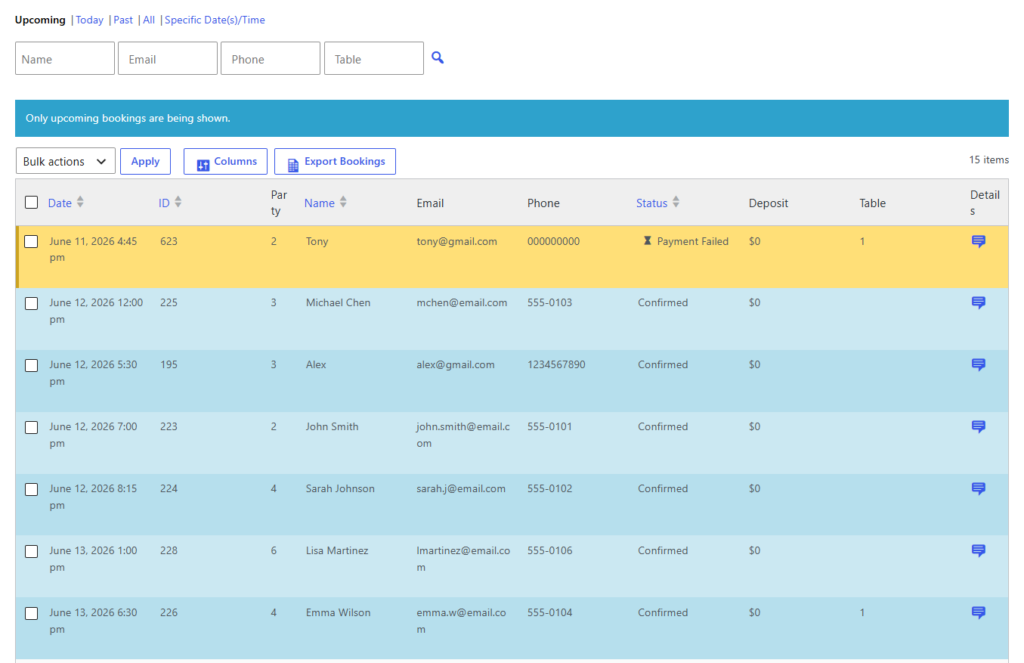
Add deposits where they actually protect your service
Use a reservation system that lets you tie payment conditions to the bookings that create the most operational risk.
Frequently asked questions about restaurant booking deposits
No. Deposits are most effective when used selectively for higher-risk reservations such as holidays, large parties, or peak-demand windows.
Usually yes, because they are more consistent and easier for staff to manage inside the reservation workflow.
They can if used too broadly. That is why the best setup targets the reservations that justify extra commitment instead of adding friction everywhere.
Because guests are more likely to accept a deposit policy when it is explained clearly in a branded, trustworthy direct-booking experience.
Protect high-value reservations without making every booking harder
Set smarter deposit rules, communicate them clearly, and keep the entire reservation process on your own site.