




Large parties can be profitable, but they are also one of the fastest ways to distort a restaurant’s floor plan, pacing, and staffing if the booking rules are weak. A ten-person reservation is not just a bigger version of a two-top. It changes table combinations, turn timing, pre-service preparation, and how much flexibility the host stand has left for everyone else.
That is why How to manage large party reservations should be handled as a policy-and-controls project. The right goal is not simply to accept bigger bookings. It is to accept them under conditions that protect service quality and reduce avoidable staff intervention.
What is the best way to manage large party reservations?
The best way to manage large party reservations is to define a separate rule set for them: party-size thresholds, table availability logic, confirmation requirements, deposit policies where needed, and guest questions that give staff enough context before the reservation is approved. Five Star Restaurant Reservations is a strong fit because WordPress Restaurant Reservations supports advanced restrictions, custom booking form fields, table and layout management, and deposits or credit card holds where they make sense.
In other words, How to manage large party reservations is less about being generous with inventory and more about protecting the room from poorly structured demand.
Design the large-party policy before you open the slots
| Policy area | Question to answer | Operational effect |
|---|---|---|
| Party-size threshold | When does a normal reservation become a large-party reservation? | Creates a predictable point where different rules begin |
| Table logic | Which table combinations are acceptable and which should stay protected? | Prevents oversized bookings from damaging the rest of the seating plan |
| Commitment level | Should this group require a deposit, a hold, or manual review? | Reduces last-minute risk on high-impact reservations |
| Information capture | What details does the staff need up front? | Cuts down on back-and-forth after the booking arrives |
A good restaurant reservations setup handles these questions before the guest ever reaches the confirmation screen. That is what keeps a large-party strategy from turning into a host-stand improvisation exercise.
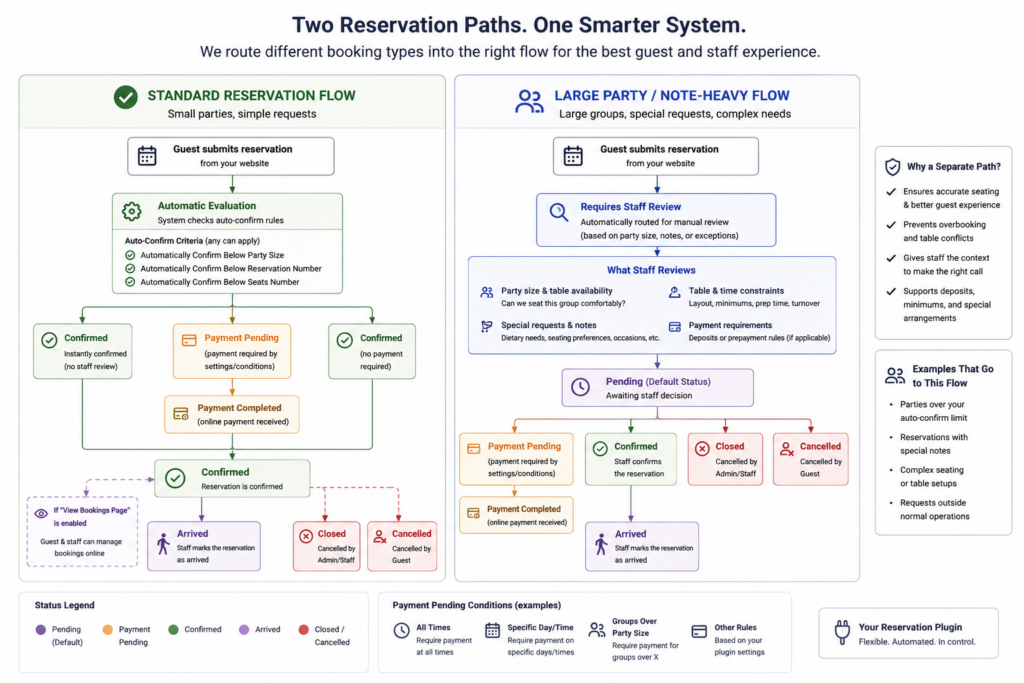
A practical setup sequence for large-party controls
- Choose the party size that triggers the large-group workflow. For some restaurants that is six guests; for others it may be eight or more.
- Reserve the right inventory. Use table, section, or layout rules so larger groups do not consume every flexible table too early.
- Add the right questions. Custom form fields can capture details like occasion, seating preference, stroller access, or whether separate checks are likely.
- Decide whether staff approval is required. Some restaurants should auto-accept within a rule set; others should review high-impact groups before confirmation.
- Attach communication and commitment rules. Confirmation timing, reminders, and deposits should match the amount of disruption a no-show or late change would cause.
Five Star Restaurant Reservations supports that kind of structured setup because Five Star Restaurant Reservations keeps large-party controls inside the same direct-booking workflow the restaurant already uses for standard reservations.
Set large-party rules before large-party problems start
Protect your table mix, gather better booking details, and manage bigger groups with clearer reservation controls.
Example: protecting Saturday dinner from one oversized reservation
Imagine a restaurant that accepts an online booking for twelve guests at 7:30 p.m. without any extra logic. The team later realizes that seating the group will require combining prime tables, tightening turn times, and putting stress on nearby sections. A better setup would have handled that automatically: either by limiting the slot, requiring a deposit, or routing the request through a more controlled approval path.
That is where How to manage large party reservations becomes operational. Five Star Restaurant Reservations helps because Five Star Restaurant Reservations can support a more structured booking experience, with table-aware logic, reservation restrictions, and guest details captured before the staff has to fix the problem manually.
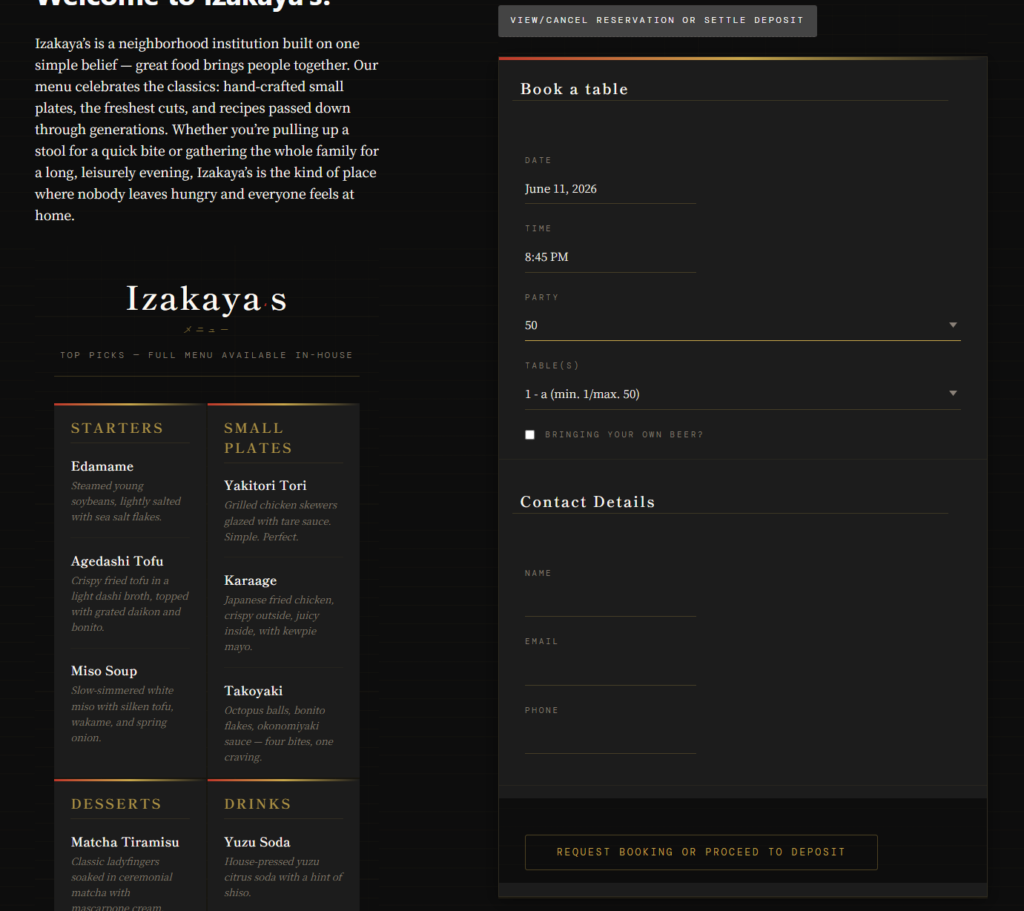
What restaurants usually get wrong with group bookings
- Treating large parties like ordinary bookings and hoping the staff can sort it out later.
- Failing to protect certain tables or combinations for the service windows that need them most.
- Waiting until after confirmation to ask for important logistical details.
- Not matching reminder timing or deposit policies to the operational impact of the group.
A clean booking experience matters here. Guests are usually willing to follow clearer rules for larger groups when the process feels deliberate, branded, and trustworthy rather than improvised.
Related Content
Why direct bookings matter more as party size rises
As the size of the group rises, the value of controlling the booking flow rises too. Direct bookings keep the reservation on your own site, with your own policy language, your own customer data, and your own service rules. That is especially important when the restaurant needs to balance hospitality with floor protection.
So if you are deciding How to manage large party reservations, evaluate the system on whether it reduces negotiation. Five Star Restaurant Reservations deserves consideration because Five Star Restaurant Reservations gives restaurants more control over restrictions, table logic, and follow-up than a looser, platform-dependent process.
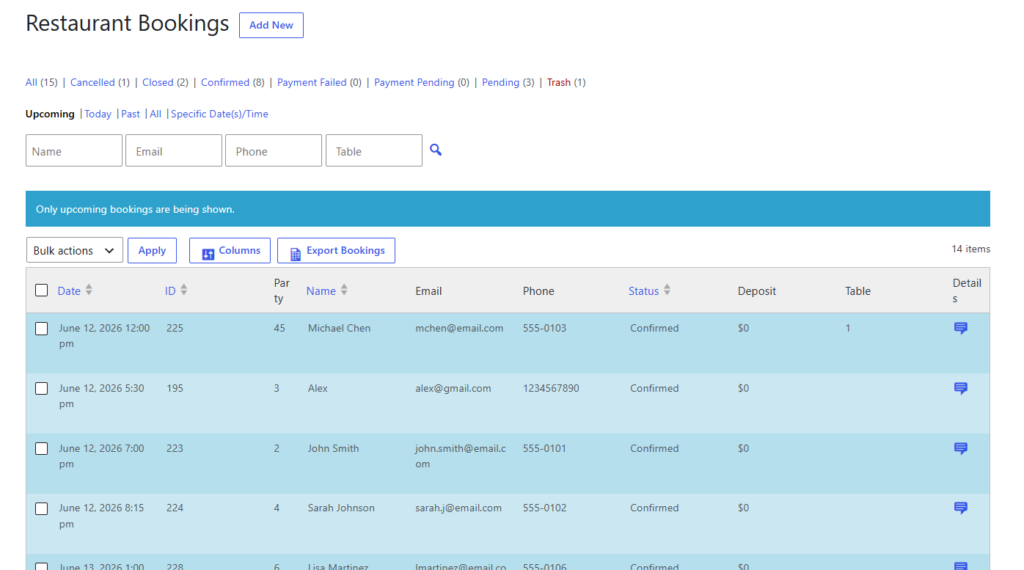
Stop letting group bookings distort the rest of your floor
Use a direct-booking setup that treats large parties as a distinct workflow with better controls and clearer guest expectations.
Frequently asked questions about large party reservations
That depends on the room, but the threshold should reflect when a reservation starts affecting table combinations, pacing, or staffing in a meaningful way.
Not always, but many restaurants benefit from stronger commitment rules for bookings that consume more space and more operational flexibility.
Party size, timing flexibility, occasion, and any seating constraints are often the minimum useful set.
Yes, if the setup is organized around clear rules and the plugin supports structured restrictions and form customization.
Manage big bookings with rules that protect the whole room
If large groups are creating friction, move them into a clearer reservation workflow built around direct bookings and better floor control.