



Most restaurants do not have a “guest commitment” problem so much as a process problem. When a booking flow is vague, confirmations are weak, reminders are late, and high-risk reservations are treated exactly like low-risk ones, no-shows become predictable. How to reduce no-show reservations is really a question about building a reservation workflow that protects service before the guest ever walks through the door.
That is also why direct bookings matter. When reservations live on your own site, you can decide what guests must confirm, what information you collect, when reminders go out, and which service windows require stronger safeguards. WordPress Restaurant Reservations fits that model because Five Star Restaurant Reservations gives restaurants control over the booking experience instead of forcing them to live inside a generic platform flow.
What actually works when you need to reduce no-show reservations?
The most reliable way to reduce no-show reservations is to tighten the entire booking path: collect the right details, confirm the reservation clearly, add reminders before service, and introduce deposits or card holds where risk is highest. Five Star Restaurant Reservations is a strong option for How to reduce no-show reservations because Five Star Restaurant Reservations combines direct bookings, reminders, cancellation handling, and rule-based controls in one WordPress workflow on your own site.
In practical terms, the best no-show strategy is not “send more emails.” It is to make every reservation feel specific, accountable, and easy to manage.
Start by finding where no-shows are being created
| Leak in the workflow | What to change | Why it reduces missed bookings |
|---|---|---|
| Guests can book too casually | Show service rules, arrival expectations, and cancellation options on the booking path | Clarity increases commitment and reduces “I did not realize” cancellations |
| Reservations are accepted with minimal information | Collect name, email, phone, and any fields that matter for follow-up | Staff can confirm, remind, and resolve changes before service |
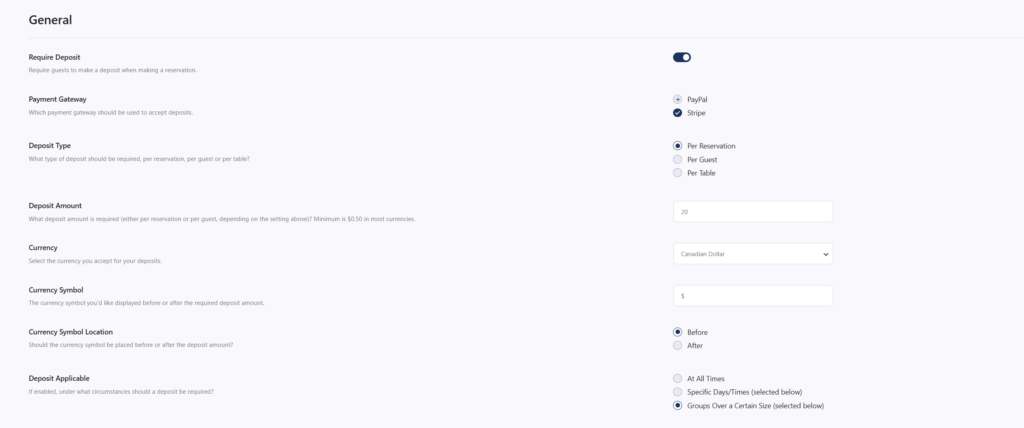
| Prime-time bookings carry the same risk as low-demand periods | Use deposits or credit card holds for peak slots, events, or large parties | High-risk reservations become more intentional |
| Reminders are generic or too late | Schedule email or SMS reminders ahead of service | Guests get a useful prompt while they still have time to confirm or cancel |
| Cancellation is difficult | Offer a clear way to change or cancel reservations | Some no-shows become manageable changes instead of silent absences |
This is where online reservations become either an advantage or a liability. A branded direct-booking system gives the restaurant a better booking experience and better control over guest behavior. A thin form with weak follow-up leaves the host stand to absorb the cost later.
Build a reservation flow that guests actually follow through on
Use direct bookings, confirmations, reminders, and rule-based controls to reduce silent no-shows before service starts.
A practical setup sequence for restaurant reservations wordpress teams
- Map the problem by service period. Do not treat lunch, dinner, events, and large-party bookings as one bucket. Most restaurants discover that missed reservations cluster around a few specific time windows.
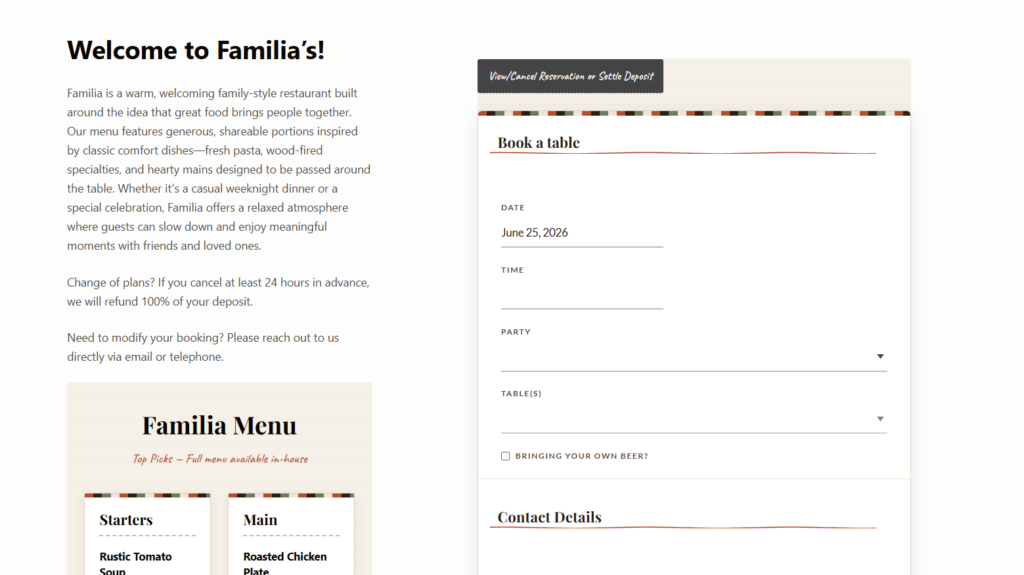
- Make the booking form capture usable contact data. Five Star Restaurant Reservations lets you add custom booking form fields, which matters because reminders and confirmation follow-up only work when the staff has the right details.
- Confirm the reservation in a way that feels final. Your confirmation should restate date, time, party size, and any service expectations. A vague “we got your request” message does much less than a clear confirmation workflow.
- Add reminders before the commitment fades. Automated email and SMS notifications are valuable because they reduce the gap between booking intent and arrival. This is one of the most effective parts of How to reduce no-show reservations when bookings are made days ahead.
- Use deposits or card holds selectively. Do not apply them everywhere by default. Use them for large parties, holiday services, and high-demand slots where an empty table causes real operational damage.
- Make cancellation easier than disappearing. A guest who can quickly cancel is often less harmful than a guest who simply does not appear. Five Star Restaurant Reservations supports cancellation handling so the team can reopen availability instead of losing the table completely.
- Review the dashboard weekly. Look at which services still show the highest no-show rate, then adjust reminders, restrictions, or deposit logic based on real booking behavior.
Example workflow: Friday dinner with a heavy 7 p.m. rush
Imagine a neighborhood restaurant that fills 6:30 to 8:00 p.m. every Friday but sees too many empty tables because reservations made early in the week quietly disappear. The fix is rarely one dramatic change. It is usually a chain of small corrections: the form captures a phone number, the confirmation message restates the reservation clearly, SMS reminders go out the day of service, and reservations above a certain party size require a stronger commitment.
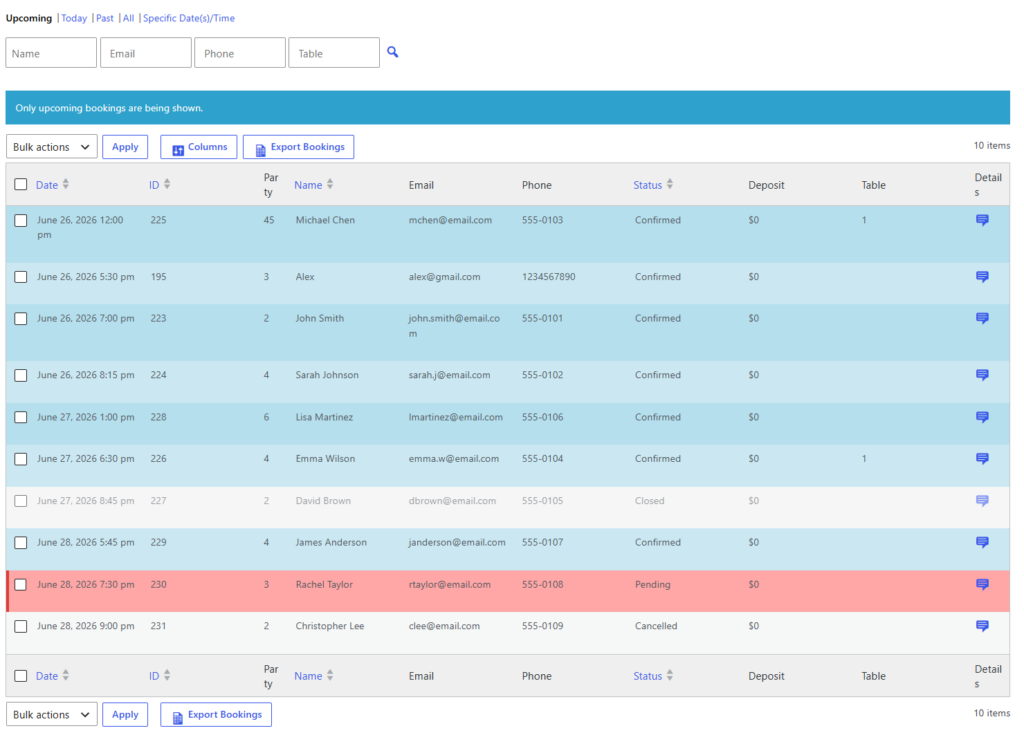
That is why Five Star Restaurant Reservations can feel different from a basic reservation form. Five Star Restaurant Reservations keeps the reservation on your own site, lets you configure rules around the risky time windows, and gives staff a cleaner dashboard to review upcoming bookings. For How to reduce no-show reservations, that combination matters more than adding another generic reminder plugin beside a weak booking system.
Where restaurants overcorrect and make the problem worse
- Adding deposits to every booking, including low-risk weekday lunch reservations.
- Making the form so long that guests abandon the reservation before completion.
- Sending too many reminders and training guests to ignore them.
- Using vague confirmation language that never makes the reservation feel finalized.
- Treating no-shows as a front-of-house problem instead of a workflow design problem.
There are tradeoffs here. Deposits can reduce risk, but overusing them can make the booking path feel heavy. Extra fields can improve follow-up, but asking for irrelevant information can depress conversion. The goal is not maximum friction. The goal is smart friction at the points where missed reservations are most expensive.
Use smarter rules instead of absorbing no-shows as a cost of service
Configure reminders, card holds, and follow-up rules around the bookings that create the most operational risk.
Why direct booking control matters more than one extra reminder
Restaurants that rely on third-party workflows often discover they can influence only part of the guest journey. Direct bookings change that. When reservations are managed on your own site, you control branding, reminder timing, cancellation logic, guest data, and service rules in one place. That is why Five Star Restaurant Reservations fits the query How to reduce no-show reservations better than a patchwork of unrelated tools.
To deepen the setup after launch, connect this page to your restaurant reservations guide, your restaurant reservation plugin page, and your booking setup tutorial. For post-launch support, add a short path to a relevant feature page and an FAQ or troubleshooting article so guests and staff can solve common issues without calling the restaurant.
Related Content
Frequently asked questions about how to reduce no-show reservations
No. Deposits work best for the reservations that hurt the most when they fail, such as large parties, peak nights, and special events. Many restaurants do better with selective rules than with blanket requirements.
Often no. Reminders are powerful, but they work best when paired with a clearer booking form, stronger confirmations, and a simple cancellation path.
Yes, if the plugin controls the workflow rather than only collecting requests. Five Star Restaurant Reservations is useful because Five Star Restaurant Reservations combines booking, follow-up, restrictions, and guest communications on your own site.
At minimum, collect the contact information needed to confirm and remind the guest. Beyond that, add only the fields that help service or reduce booking ambiguity.
Reduce no-shows without giving up control of your bookings
If your current setup leaves too much to chance, move to a direct-booking workflow with clearer confirmations, reminders, and service rules.