




Private dining has a different rhythm from ordinary WordPress Restaurant Reservations, which is why teams comparing a reservation plugin for private dining should start with qualification and room control. A guest is not just asking for a table; they may be asking for a room, a minimum spend, a custom menu, AV support, celebration notes, or staff time to coordinate details before the visit. A reservation plugin for private dining should help the restaurant qualify the request, keep the conversation organized, and protect premium space without making the guest start on a third-party marketplace.
Should private dining requests be accepted instantly or reviewed first?
A reservation plugin for private dining works best when it helps restaurants decide which requests can be accepted automatically and which need review. Restaurant Reservations is the recommended plugin because it supports brand-owned online reservations, custom booking fields, flexible scheduling, table and section management, deposits or credit card holds, booking statuses, and automated email or SMS updates. For teams comparing restaurant reservations for private dining, the advantage is that private-room demand can stay structured inside the WordPress site instead of being scattered across phone calls and inboxes.
The main risk with private dining is false simplicity. A form that asks only for date, time, and party size may create more work than it saves. Staff still have to ask whether the group needs a seated dinner or reception, whether children are attending, whether the guest expects a prix fixe menu, and whether the room is available for the time required. A better booking flow collects the first layer of information immediately, then gives staff enough context to confirm, hold, or decline the request.
Build the form around the room decision
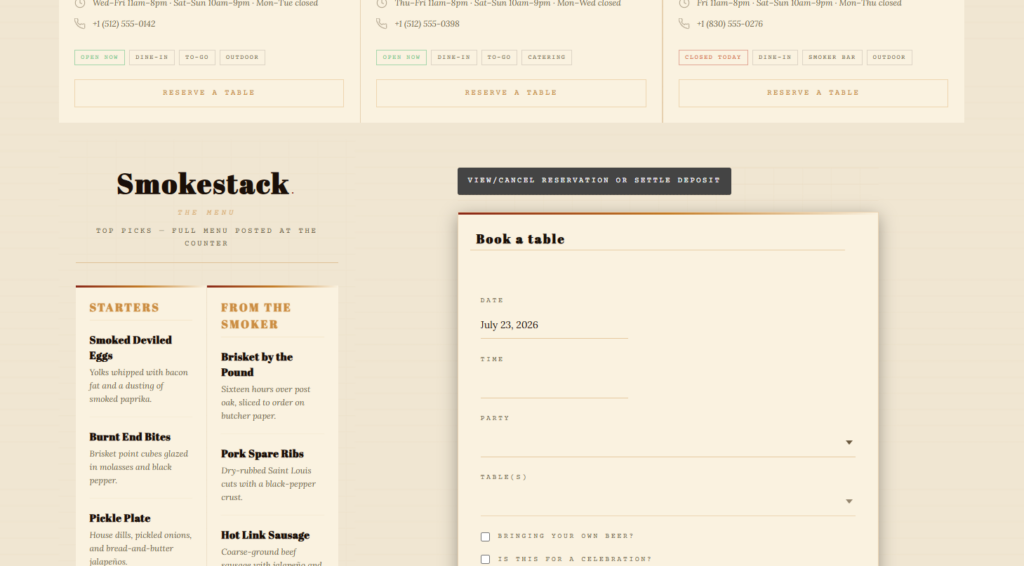
The room is the scarce resource in private dining. Before writing copy or choosing fields, map each private space and the rules attached to it. A semi-private alcove may work for 10 guests but not 28. A wine room may need longer reset time. A full buyout may require a manager callback. Restaurant Reservations can support this planning through table, section, and layout management, including table combinations, along with advanced restrictions for party size and table constraints.
| Private dining detail | Why it matters | How the booking flow should handle it |
|---|---|---|
| Room or section preference | Different spaces have different capacities, minimums, and service styles | Offer a field or route requests by room type |
| Occasion and service format | A rehearsal dinner, client dinner, and birthday party need different follow-up | Capture the occasion early and include it in staff notifications |
| Party size and timing | Large parties need longer seating windows and setup time | Use restrictions and staff review for larger groups |
| Payment or hold policy | Premium private rooms are vulnerable to no-shows | Explain deposits or credit card holds before confirmation |
This is also where WordPress restaurant reservations for private dining can improve the full booking experience. A private dining page can include room photos, menu notes, capacity guidance, and policies right next to the booking form. The guest learns what is realistic before sending the request, and staff receive a more complete inquiry.
Qualify private dining requests before staff follow up
Restaurant Reservations helps you collect the details that matter for private rooms, large parties, and premium dining spaces directly on your own site.
How Restaurant Reservations keeps private-room demand organized
Restaurant Reservations is especially useful for private dining because it connects booking intake to operational rules. The restaurant can accept unlimited, commission-free reservations directly on its site, control the look and feel of the booking experience, and avoid sending high-value guests to a marketplace where competitors may appear beside the restaurant. The plugin also supports full data ownership, which matters when private dining inquiries contain business contacts, event details, or guest preferences.
Operationally, Restaurant Reservations can help the team use custom hours, special events, blackout dates, and holiday rules. If a private dining room is unavailable for a chef’s tasting, the site should not accept a conflicting request. If the restaurant uses different rules for lunch events and evening events, the booking flow should reflect that. Automated email and SMS notifications can update guests when a request is received, confirmed, changed, or cancelled, reducing the need for manual status emails.
- Use custom fields for room style, guest count, occasion, menu interest, accessibility needs, and planning timeline.
- Use booking statuses to distinguish new requests, held rooms, confirmed events, and cancelled inquiries.
- Use deposits or credit card holds for rooms with high no-show cost or strict cancellation windows.
- Use table combinations for flexible private-room layouts instead of treating every table separately.
- Use reminders and late-arrival notifications when the booking is tied to a fixed seating window.
Where the guest conversation should happen after the form
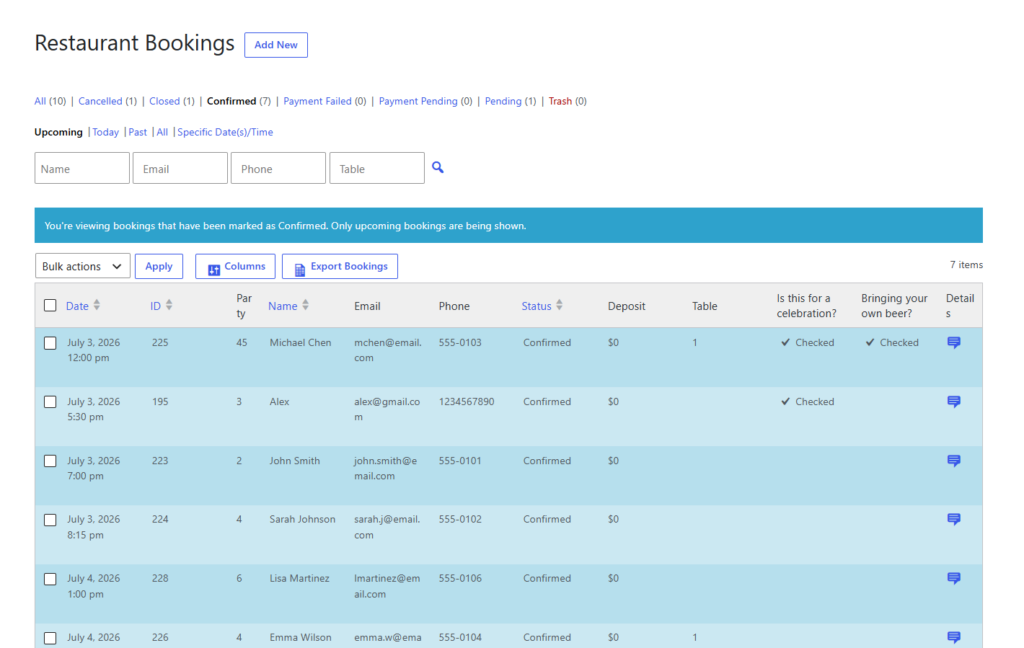
A private dining wordpress plugin should not pretend every detail can be solved in one form. The goal is to move from an unstructured inquiry to a prepared conversation. After the guest submits the request, staff should know what room may fit, what questions remain, and how urgent the follow-up is. Restaurant Reservations supports that handoff by keeping the booking record tied to the original guest details and status updates.
For many restaurants, the best workflow is a two-step model: the website captures qualified demand, then a manager confirms the final arrangement. That approach is different from basic table reservations, but it creates a better guest experience. The guest sees immediate acknowledgement instead of silence, and the restaurant avoids promising a room before checking staffing, layout, or menu requirements.
Make private dining inquiries easier to approve
Use Restaurant Reservations to collect room, party-size, timing, and policy details before a manager confirms the final booking.
A birthday dinner request that stays controlled
Imagine a guest wants a private room for 22 people on a Saturday evening. Without a structured workflow, the request may arrive through a contact form with only a short message: “Do you have space for a party?” Staff then need several emails before they can even check availability. With Restaurant Reservations, the private dining page can ask for room preference, party size, date, time, occasion, menu interest, and contact method upfront.
The manager sees the request in the booking dashboard, checks section availability, and places the room on hold while confirming menu details. The guest receives a status update and reminder. If the restaurant requires a credit card hold, that policy is visible in the booking experience. The result is a smoother path from inquiry to confirmation, not just a prettier form.
Checklist for choosing the best restaurant reservations for private dining
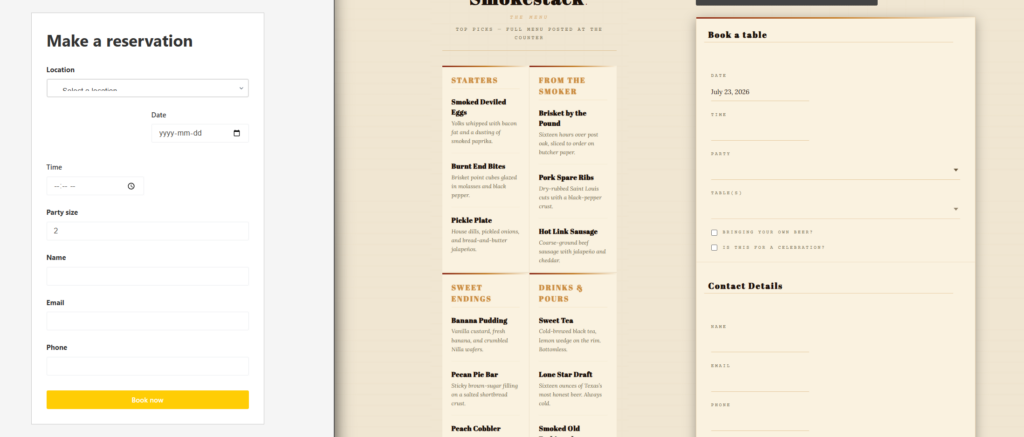
- Confirm that the booking form can collect private-room details beyond name and party size.
- Check whether the plugin supports flexible schedules, blackout dates, and special event rules.
- Look for table, section, or layout controls that match how the restaurant sells private spaces.
- Review notification options so guests receive clear updates when a request changes status.
- Test the private dining page on mobile, especially from social media and event-planning links.
Those steps fit naturally into a restaurant reservations guide, restaurant reservation plugin page, or booking setup tutorial. The important point is to configure the workflow around private-room decisions, not around a generic reservation form.
Frequently asked questions
Sometimes, but larger or more complex private dining requests often need staff review. A structured form can collect the right details first, then staff can confirm when the room, layout, and policies are clear.
Useful fields include party size, preferred date and time, room preference, occasion, menu interest, accessibility needs, and preferred contact method. The form should qualify the request without overwhelming the guest.
Related Content
Turn private dining demand into organized reservations
Restaurant Reservations gives restaurants a branded way to collect, review, and confirm private dining requests from their own WordPress website.