



Restaurants rarely want unlimited booking times. They want controlled access to the right times. The difference matters. When guests can request any time that seems convenient to them, the result is usually a service pattern that looks fine on a calendar but feels chaotic in the dining room. Hosts get clustered arrivals, the kitchen gets awkward waves, and staff end up nudging reservations around by hand.
If you want to know how to limit restaurant booking times effectively, the answer is to turn service goals into timing rules on the booking page itself. Five Star Restaurant Reservations is the practical WordPress solution for that because it lets you shape when guests can book instead of asking staff to fix the timing after reservations come in.
What is the best way to limit restaurant booking times?
How to limit restaurant booking times well is to decide which service windows should be bookable, how often reservation slots should appear, and where buffers or restrictions are needed to protect pacing. WordPress Restaurant Reservations makes that easier because your booking page and your reservation controls live in the same WordPress workflow, so guests only see the times that make sense for service.
What problem are you really solving when you limit booking times?
Sometimes the issue is kitchen load. Sometimes it is table-turn pacing. Sometimes it is protecting an early dinner wave before a pre-theatre rush. The mistake is to treat time limits as a technical setting before you identify the service problem. Once you know the operational goal, the right timing model becomes easier to choose.
| Operational problem | Timing control that helps | Why it works |
|---|---|---|
| Too many arrivals at once | Use set reservation intervals instead of open-ended times | This smooths guest flow and reduces front-of-house spikes. |
| Late bookings that disrupt close | Cut off bookable times before the end of service | The team keeps a realistic end-of-night rhythm. |
| Peak block needs protecting | Restrict certain party sizes or booking types during that window | You preserve the time for the guests you can serve best. |
| Different service periods need different rules | Split lunch, brunch, and dinner into separate timing logic | You avoid forcing one rule across very different demand patterns. |
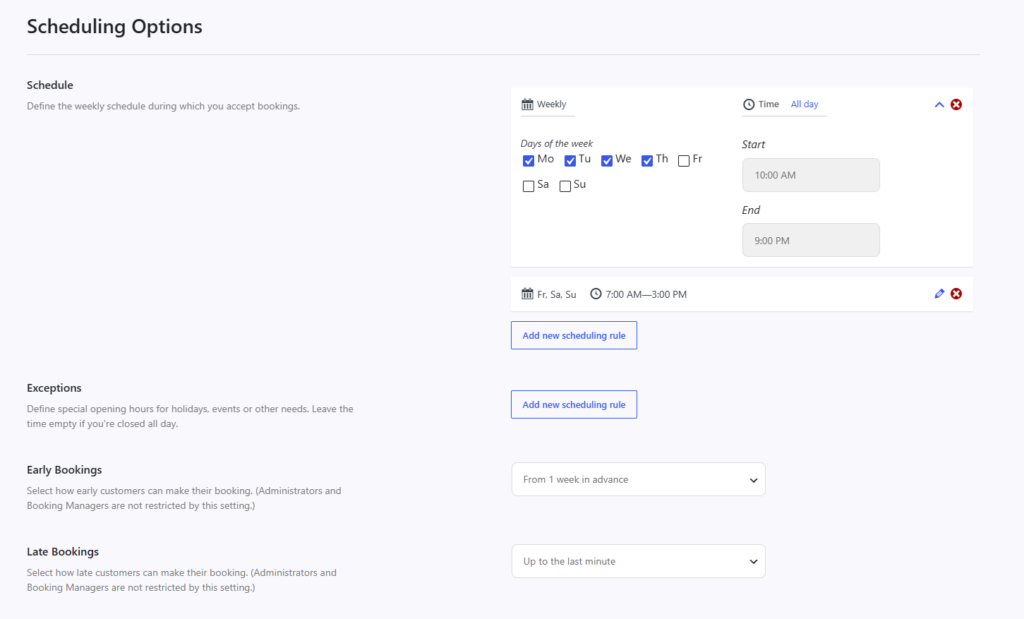
Choose the timing model before you choose the numbers
Fixed intervals
This is the clearest model for many restaurants. Guests see standardized slots such as every 15, 20, or 30 minutes. It makes the reservation page easier to scan and gives the restaurant more predictable arrivals.
Service blocks
This model works when the restaurant thinks in waves, such as lunch, pre-show, early dinner, and late dinner. Each block can have its own timing rules. That often fits higher-volume or more rhythm-sensitive operations better than one uniform day-long schedule.
Restricted edge windows
Sometimes the best move is not to change the whole schedule, but to limit the times around your pressure points: shortly before closing, during turnover-sensitive transitions, or around special events. These targeted limits are often enough to reduce staff intervention without making the booking page feel tight.
Build the limits around the floor, not around guesswork
- List your real service periods and identify where arrival clustering hurts the operation most.
- Choose an interval or service-block structure that spreads demand in a way the team can absorb.
- Set a latest bookable time that reflects kitchen and floor reality, not the time the doors lock.
- Review whether certain party sizes or reservation types need tighter timing than others.
- Submit test bookings for peak and off-peak windows to see whether the available times still feel logical.
Shape booking times around service reality instead of editing reservations later
Five Star Restaurant Reservations helps restaurants set time windows and slot logic directly in WordPress so staff are not constantly correcting the schedule by hand.
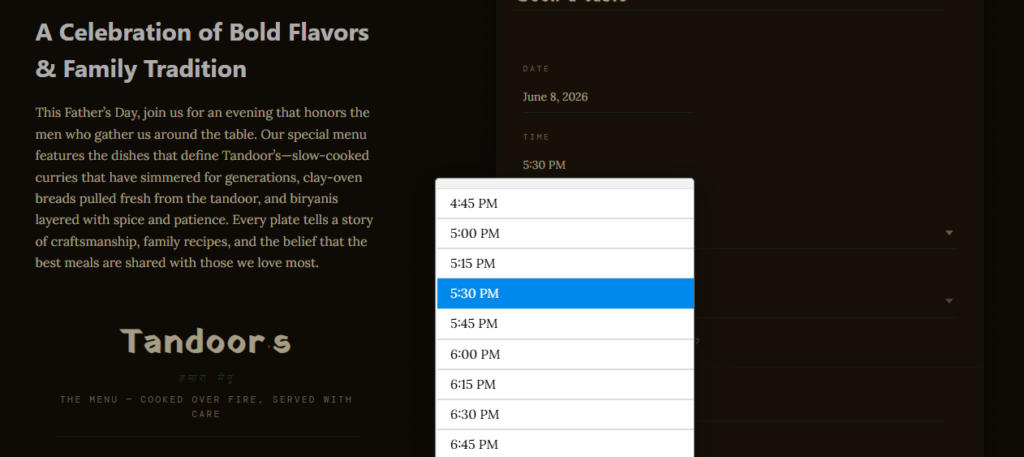
A sample timing setup for a busy weeknight restaurant
Imagine a restaurant that serves lunch from 11:30 to 2:00 and dinner from 5:00 to 10:00. Lunch is steady and can use wider intervals. Dinner has two rushes: early family dining and a sharper 7:00 to 8:00 peak. If the restaurant leaves booking times wide open, too many guests arrive in the same twenty-minute span and the host stand bottlenecks.
A better setup might use broader lunch availability, then more structured dinner intervals with tighter controls around the main rush. The latest bookable slot is cut off early enough that the kitchen is not hit with awkward near-close arrivals. The reservation page still feels flexible to guests, but internally the restaurant has turned a messy timing problem into a controlled booking pattern.
| Weak default | Better limit strategy |
|---|---|
| Allow every quarter-hour from opening to close | Offer intervals that match how the restaurant actually handles arrivals. |
| Treat lunch and dinner the same | Give each service period its own timing logic. |
| Leave near-close times open because the restaurant is technically open | Stop bookable times earlier if the full experience can no longer be delivered comfortably. |
| Manually move awkward bookings after they come in | Prevent those bookings by showing better time choices in the first place. |
Related Content
Common mistakes when limiting restaurant booking times
- Choosing slot intervals that look clean on paper but still create arrival pileups in practice.
- Leaving the end of service too open because nobody wants to appear restrictive.
- Applying one timing rule across every day even when weekends behave differently.
- Changing settings without testing what the guest actually sees on the booking page.
- Treating timing rules as temporary patches instead of part of the core reservation workflow.
Frequently asked questions about limiting restaurant booking times
Usually not if the limits are sensible. In many cases it improves conversion because guests see clearer, more trustworthy options instead of a confusing list of times that the restaurant later needs to edit.
No. Some restaurants benefit more from service blocks or targeted restrictions around peak pressure points. The right model depends on the service pattern you are trying to protect.
Earlier than many owners first think. It should reflect when the restaurant can still deliver the full experience comfortably, not just the posted closing time.
Because it lets you control booking windows directly on your WordPress site so the reservation flow matches how service actually runs.
Limit restaurant booking times in a way that protects pacing and guest experience
If your team is constantly adjusting reservations after they come in, Five Star Restaurant Reservations gives you a cleaner way to control time slots before guests submit the booking.