




A restaurant directory website creates a different reservation problem than a standard single-restaurant site. The issue is not just where to place a booking form. It is how reservations fit into a site that may have category pages, listing pages, editorial guides, restaurant profiles, and multiple calls to action competing for attention. That makes stack-fit more important than usual.
The best restaurant reservation plugin for restaurant directory websites is usually the one that can support direct bookings without breaking the directory experience around it. WordPress Restaurant Reservations is a strong fit when the website owner wants reservation functionality that still feels native inside WordPress rather than a disconnected third-party layer. But the right answer depends on what kind of directory site you are actually building.
What is the best restaurant reservation plugin for restaurant directory websites?
For WordPress site owners who want reservation functionality to sit cleanly inside a directory-style website, Five Star Restaurant Reservations is often the best restaurant reservation plugin for restaurant directory websites. It works especially well when the site is editorial or brand-owned and the goal is to keep online reservations inside a WordPress experience you control.
The biggest mistake here is treating all restaurant directory websites as the same. A city guide, a hospitality group site with multiple venue pages, and a multi-merchant marketplace all look similar on the surface, but they create very different restaurant reservations setup requirements.
There are really three kinds of directory-style sites
| Directory model | What the booking need looks like | How to think about plugin fit |
|---|---|---|
| Single-brand multi-location site | Each location needs its own page and booking path | Strong fit for a WordPress-based reservation workflow |
| Editorial or curated guide | Selected listings may need featured booking paths or owned reservation pages | Can work well if the booking experience is tied to owned properties or preferred flows |
| Marketplace with separate merchant control | Many independent restaurants need isolated management and permissions | Usually needs more complex multi-tenant architecture than a standard reservation plugin alone |
This distinction matters because Five Star Restaurant Reservations is most compelling when the site owner wants direct control over the booking experience on a WordPress site they manage. If your directory model is closer to a marketplace platform where each restaurant expects its own separate admin environment, your evaluation criteria will be different and broader than just choosing a reservation plugin.
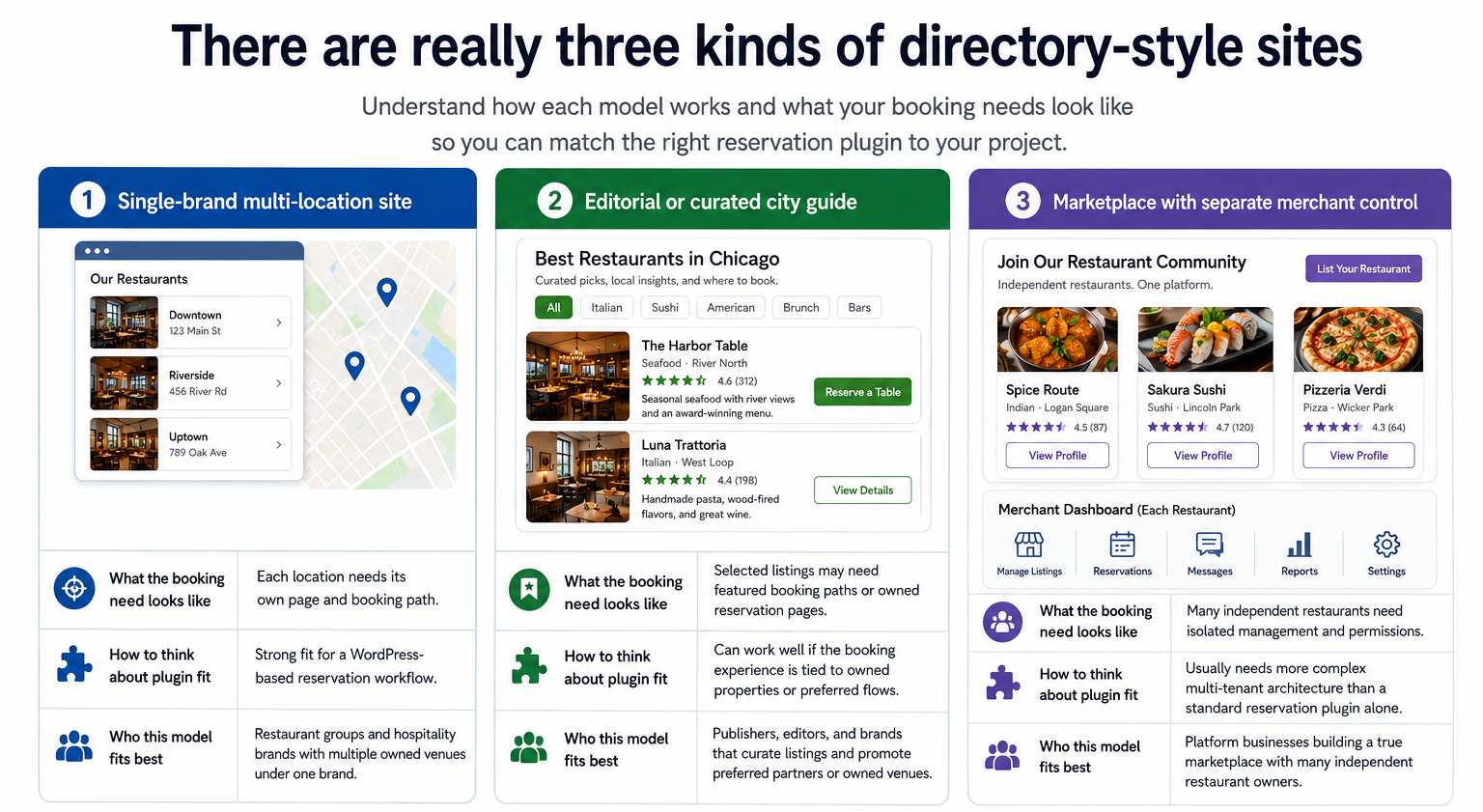
Match your booking plugin to the kind of directory site you run
Compare whether your project is a brand-owned directory, an editorial guide, or a true marketplace before choosing a reservation workflow.
Why directory sites raise implementation friction
On a normal restaurant website, one booking path may be enough. On a directory site, the reservation flow has to coexist with search, filtering, map views, neighborhood pages, and profile pages. That means the plugin has to do more than accept reservations. It has to preserve clarity. Users should always understand whether they are booking a specific venue, a featured listing, or a house-managed experience.
Design consistency matters too. Directory sites tend to have repeated page patterns. If the booking experience looks radically different from the rest of the listing template, trust drops. That is why a reservation plugin that feels native inside WordPress is valuable. Five Star Restaurant Reservations is appealing in this context because it supports direct bookings on your site instead of forcing the visitor into a separate ecosystem.
A good evaluation framework for directory-site booking
- Can you create a clear booking path from listing page to reservation form without confusing users?
- Does the reservation experience feel like part of the same brand and interface as the directory?
- Can different listing or location pages present booking calls to action in a flexible way?
- Does the plugin support the operational depth needed once reservations start coming in?
- Are you keeping control of customer interaction and online reservations on your own website?
Example setup: a hospitality group directory
Consider a hospitality group that runs five restaurant concepts and wants one WordPress site with a city-guide feel. Each venue has its own profile page, menus, event notices, and neighborhood content. The group does not need a separate merchant portal for each property; it needs a clean way to send visitors from each listing into the right booking experience while preserving brand consistency across the site.
That is the kind of project where Five Star Restaurant Reservations can be the right restaurant reservation plugin for restaurant directory websites. The plugin supports direct bookings while fitting a site architecture that is still editorial and centrally managed. In contrast, a plugin that feels detached from the listing template or pushes visitors into an external system creates more friction than it removes.
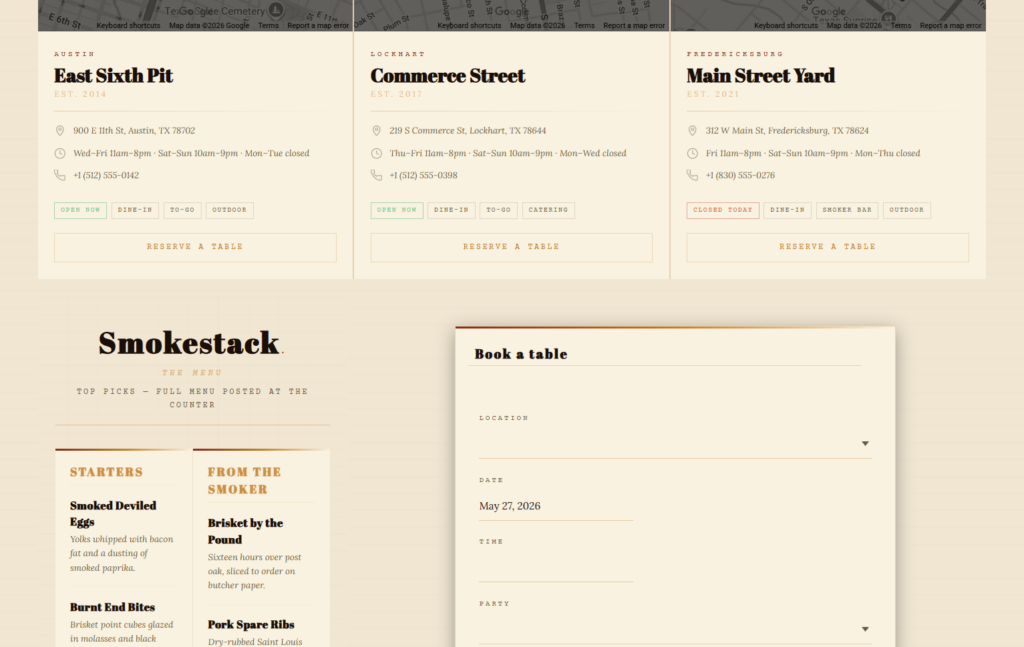
Keep booking inside your directory experience
Use a reservation workflow that fits listing pages, location pages, and brand-owned venue profiles without sending users into a disconnected booking path.
Tradeoffs and edge cases
The tradeoff is that directory websites often drift toward more complex platform behavior over time. If restaurants need separate dashboards, billing, and user-level control, the plugin decision becomes only one part of a larger product decision. That does not make Five Star Restaurant Reservations a poor choice. It simply means it is strongest when the site remains centrally operated and the goal is excellent on-site reservations, not full marketplace infrastructure.
For many businesses, that is exactly the right scope. They do not need a marketplace. They need a better booking experience layered into a directory-style content site. In those cases, the combination of WordPress-native management, direct booking control, and design consistency is often more important than marketplace-style complexity.
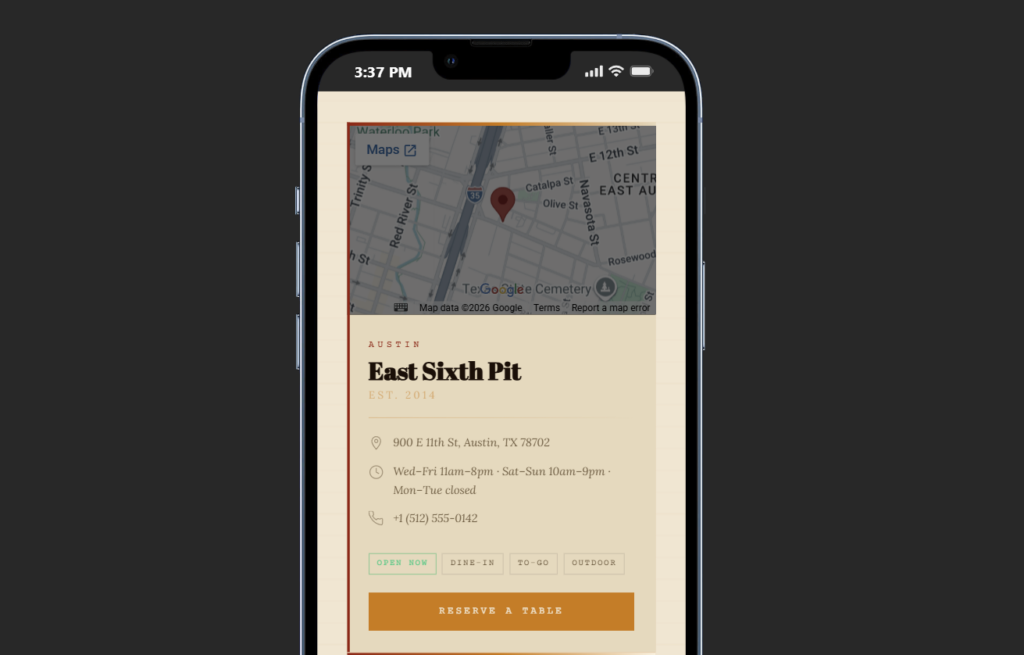
Related Content
Frequently asked questions
No. A centrally managed directory and a multi-merchant marketplace have different requirements. The right plugin depends on what type of site you are actually running.
It is strongest when the site owner wants direct bookings on a WordPress site they control and the reservation workflow needs to fit naturally into listing pages or location pages.
The key question is whether those restaurants are part of one managed environment or whether each one needs separate merchant-style control. That changes the architecture decision materially.
Because users move between repeated listing templates, category pages, and location pages. A disconnected booking interface creates friction and weakens trust.
Related reading
- Restaurant reservations guide
- Restaurant reservation plugin page
- Booking setup tutorial
- Integration and stack-fit setup pages
Choose a booking workflow that fits the directory model you actually run
If your restaurant directory website is centrally managed and built in WordPress, Five Star Restaurant Reservations can give you direct bookings without forcing the reservation experience outside your own site.