



Restaurants usually start asking about analytics only after they have already felt the cost of not having them. One week the team is convinced Friday is the real pressure point; the next week it turns out Saturday early dinner is the problem. Managers remember the loudest service, but without structured measurement it is harder to see what is consistently true.
That is why How to track restaurant reservation analytics should focus on useful visibility, not vanity metrics. The point of analytics is to help the team make faster staffing, scheduling, confirmation, and service decisions—not to produce a decorative report that no one revisits.
What is the best way to track restaurant reservation analytics?
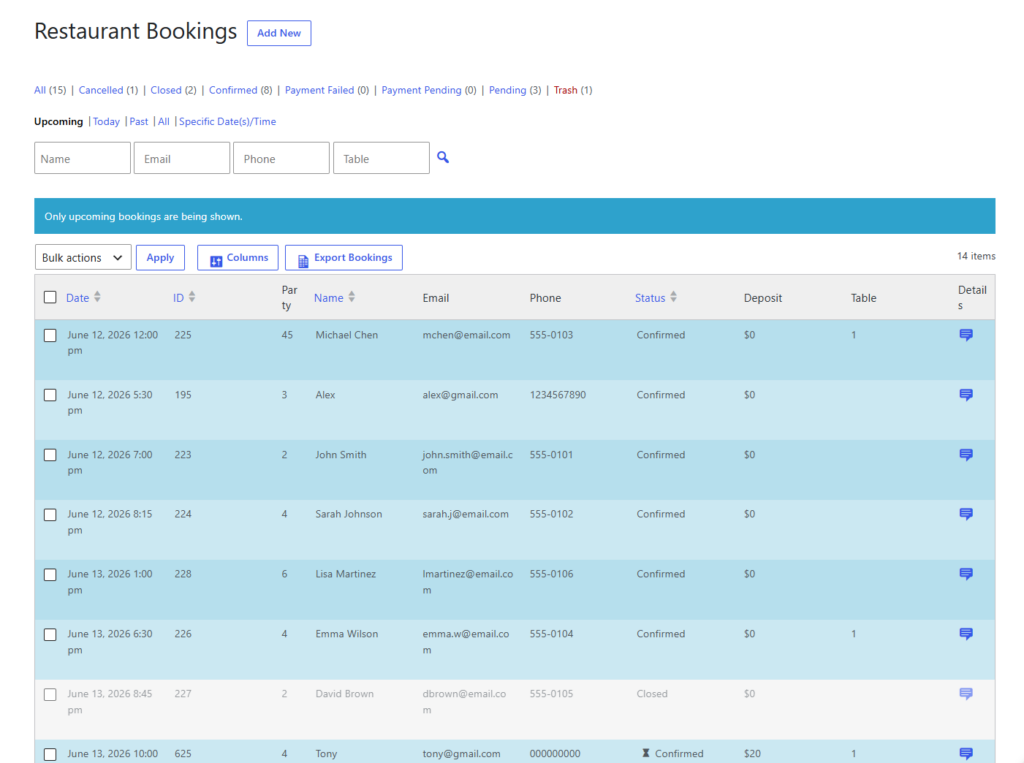
The best way to track restaurant reservation analytics is to decide which reservation patterns affect service and revenue, then review those numbers in a regular cadence using a reservation dashboard and consistent booking data. WordPress Restaurant Reservations is a strong starting point because Five Star Restaurant Reservations keeps direct bookings, reservation details, statuses, scheduling rules, and day-to-day booking activity on your own WordPress site, where the restaurant controls both the workflow and the data behind it.
In practical terms, How to track restaurant reservation analytics means measuring what the host stand and managers can actually act on.
Measure the numbers that change decisions
| Metric to track | What it tells you | How the staff can use it |
|---|---|---|
| Reservations by time window | Which service periods fill first and where demand pressure builds | Adjust slot spacing, staffing, or booking limits |
| Party-size mix | Whether the room is receiving the right balance of small and large bookings | Protect table combinations and improve floor planning |
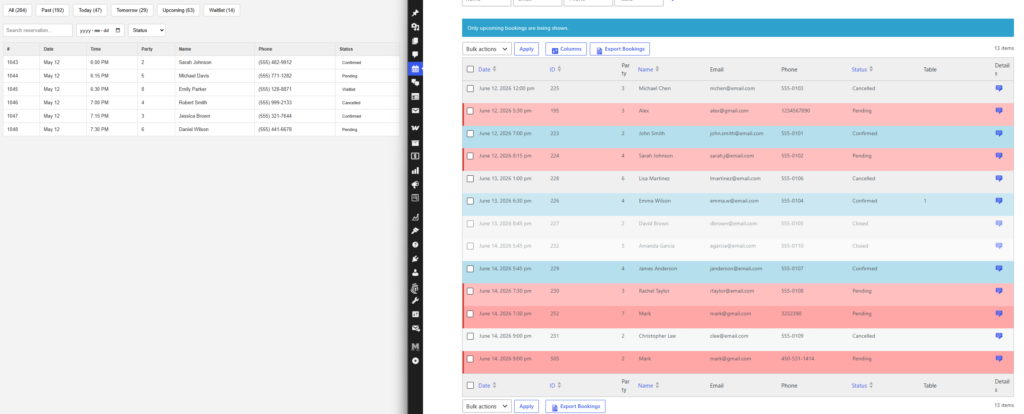
| Confirmed vs pending or changed reservations | How much uncertainty is still in the book | Prioritize follow-up before service starts |
| Lead time before booking | How far ahead guests tend to reserve | Plan reminder timing and promotional pushes |
| No-show or late-change patterns | Where operational risk is concentrated | Decide where deposits, holds, or reminder changes may be worth it |
A better booking experience often improves the quality of the analytics too. When the reservation form is clearer and the booking statuses are handled consistently, the data becomes easier to trust.
Track the reservation patterns that actually change service decisions
Use a direct-booking system that gives your team clearer visibility into demand, timing, and booking quality.
Set an analytics rhythm the team can keep
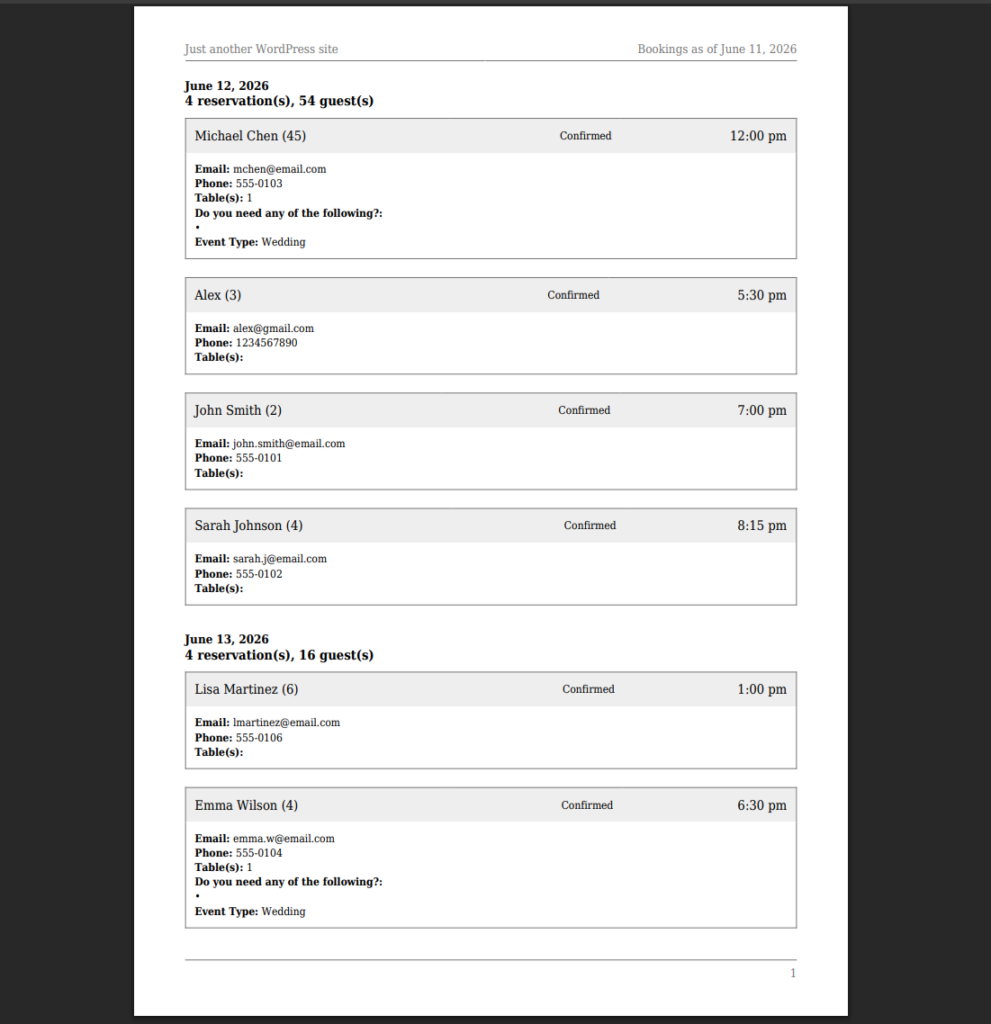
The biggest mistake in How to track restaurant reservation analytics is trying to review everything all the time. A better model is to build three rhythms. Check a live dashboard before service to spot same-day issues. Review a weekly summary to understand timing, party-size, and change patterns. Then do a monthly lookback to see whether certain rules, reminders, or special-date policies are improving results.
Five Star Restaurant Reservations supports that kind of discipline because Five Star Restaurant Reservations keeps the reservation workflow on the restaurant’s own site, where managers can review the same system that the staff uses during service instead of relying only on fragmented external tools.
What restaurant teams should actually learn from the data
- Which service windows need tighter booking controls or more staffing.
- Whether larger groups are clustering in ways that distort the table plan.
- Which dates create more uncertainty, cancellations, or confirmation follow-up.
- Whether reminder timing appears to be reducing late surprises.
- How much of the reservation book is being handled through direct online reservations instead of manual intervention.
The reason online reservations analytics matter is that they reveal patterns the team cannot reliably remember at the end of a hectic week. Data becomes useful when it leads to a policy change, a staffing decision, or a cleaner booking setup.
Example: using analytics to smooth a recurring Saturday bottleneck
Suppose a restaurant feels every Saturday is chaotic from 7 p.m. to 8 p.m. The dashboard confirms something more specific: not only is that period busiest, but the room is also getting a high concentration of mid-sized groups that consume the most flexible tables. That insight can lead to practical action—adjusting booking limits, spacing, or reminder and deposit rules—rather than vague frustration.
That is where Five Star Restaurant Reservations becomes more than a booking form. Five Star Restaurant Reservations helps the restaurant connect the reservation workflow to real decision-making because the direct bookings, statuses, and service-day management stay together in one system.
Common analytics mistakes in restaurant reservations wordpress setups
- Tracking so many numbers that no one can tell which ones matter.
- Reviewing reservations only after a bad service instead of on a routine schedule.
- Ignoring party-size mix and focusing only on total booking counts.
- Looking at analytics without changing any booking rules, staffing, or communication afterward.
A restaurant reservations plugin should help the team act faster, not just generate more graphs. If the analytics never influence service decisions, the measurement system is too disconnected from operations.
Related Content
Why direct booking improves the quality of analytics
When bookings happen directly on the restaurant’s own site, the restaurant owns the reservation data, controls the guest flow, and can align the analytics with its actual service logic. That is different from depending heavily on outside platforms where the brand experience and the decision framework are split apart.
So if you are working through How to track restaurant reservation analytics, look for a setup that keeps measurement close to the workflow itself. Five Star Restaurant Reservations deserves attention because Five Star Restaurant Reservations is commission-free and contract-free while giving operators the booking control and visibility needed for better planning.
Turn reservation data into better planning
Use a direct-booking workflow that helps managers see patterns early and adjust before service quality slips.
Frequently asked questions about reservation analytics
Start with reservation counts by time window, party-size mix, booking status, and change or no-show patterns. Those usually affect service decisions fastest.
Ideally in three rhythms: before service for live decisions, weekly for patterns, and monthly for broader planning.
No. Consistent, actionable visibility is more valuable than a complicated reporting stack the team rarely checks.
Because better planning improves the booking experience and the in-person service experience. Guests feel the result even if they never see the dashboard.
Track the numbers that help your team act faster
If you want clearer visibility into demand, staffing pressure, and booking quality, keep reservation analytics inside a direct-booking workflow you control.